Diploma in Professional Chef
 319 Students


 14-Day Money-Back Guarantee
-
1 Year Access
 -
Level 3 - Diploma Skill Level
 -
Course Certificate Certificate
 -
97 Units
Units -
2 Quizzes
 -
2 days, 16 hours Duration
Diploma in Professional Chef Overview
If you find joy in trying out exotic spices and experimenting with new recipes, then becoming a chef can be the most satisfying profession for you. It will give you the opportunity to do what you love and earn a handsome amount at the same time. The Diploma in Professional Chef course will be the best place to start your training. It will give a walk through the culinary world and help you develop your knowledge of food.
The Diploma in Professional Chef course will introduce you to the fundamental traits of a successful chef. In this course, you will learn about the essential tools and equipment required in every kitchen. From chopping skills to cooking different cuisine, you will be able to learn the essentials in this course. Here, the informative modules will elevate your knowledge of different cooking techniques. In addition, you will receive detailed lessons on how to open and run a food business.
Along with valuable cooking skills, this Diploma in Professional Chef course will also provide you with a wide range of recipes. In addition, upon completing the course, you will receive a certificate; this certificate will help you pursue a promising career in the culinary industry.
Learning Outcomes
- Learn the basic skills required to become a chef
- Familiarise yourself with the tools and equipment used in a kitchen
- Understand the mix of sweet, spicy and savoury
- Build your expertise in cooking different types of cuisines
- Grab valuable cooking tips and techniques
- Get introduced to the core principles of food business management
- Learn a wide range of cooking recipes
Who is this Course for?
This Diploma in Professional Chef course is the perfect training ground for aspiring chefs. It will provide them with the fundamentals of cooking. In addition, it will also assist them in becoming professional chefs.
Why Choose this Diploma in Professional Chef Course?
- Affordable, well-structured and high-quality e-learning study materials
- Engaging tutorial videos, materials from the industry-leading experts
- Opportunity to study in a user-friendly, advanced online learning platform
- Efficient exam systems for the assessment and instant result
- UK & internationally recognised accredited qualification
- Access the course content on mobile, tablet, or desktop from anywhere, anytime
- Excellent career advancement opportunities
- 24/7 student support via email.
Entry Requirement
- This course is available to all learners of all academic backgrounds.
- Learners should be aged 16 or over to undertake the qualification.
- A good understanding of the English language, numeracy, and ICT is required to attend this course.
Assessment
At the end of the course, you will be required to sit for an online multiple-choice test. Your test will be assessed automatically and immediately so that you will instantly know whether you have been successful.
Moreover, before sitting for your final exam, you will have the opportunity to test your proficiency with a mock exam.
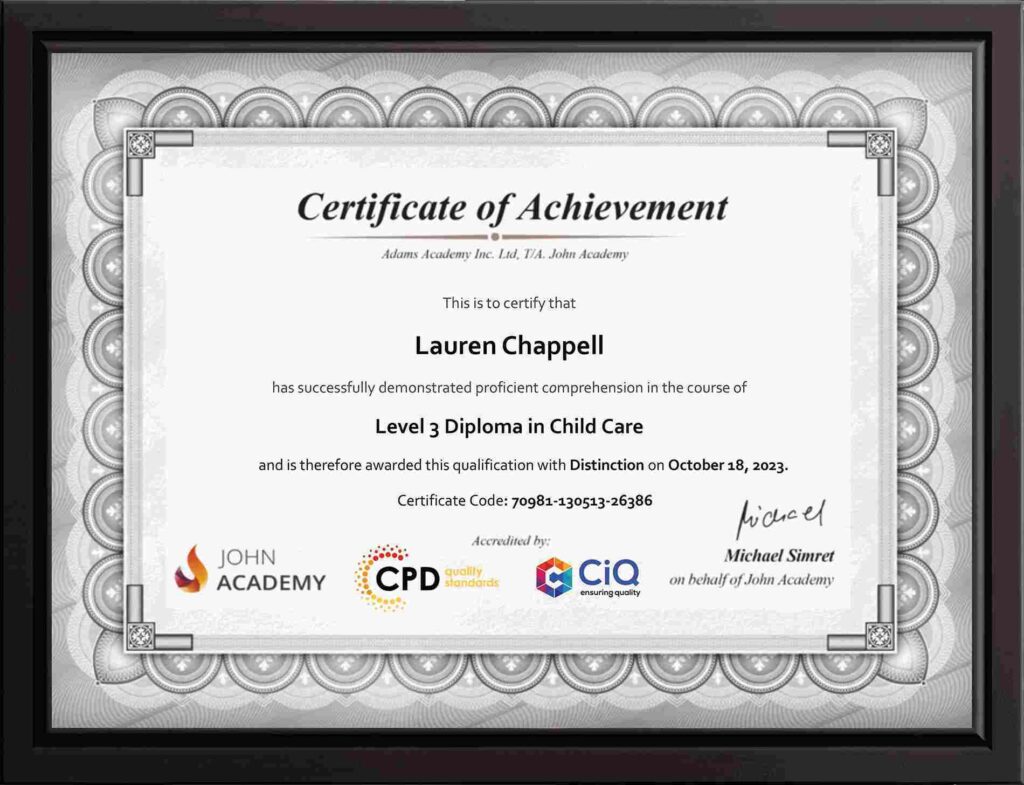
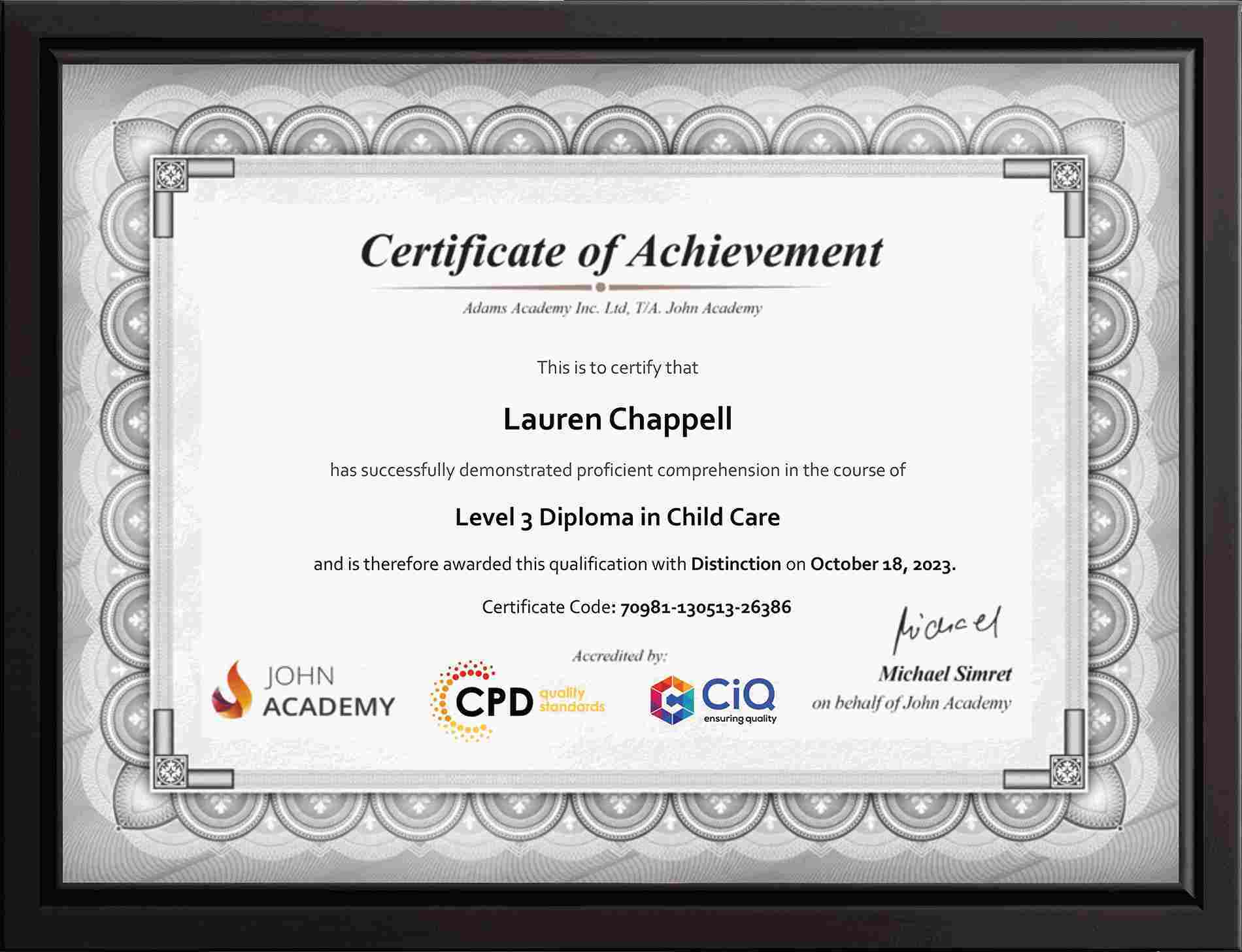
Certificate of Achievement
After completing this course successfully, you will be able to obtain an Accredited Certificate of Achievement. Certificates & Transcripts can be obtained either in Hardcopy at £14.99 or in PDF format at £11.99.
Career Path
The Diploma in Professional Chef course is a useful qualification to possess, especially to people with careers in:
- Chef
- Restaurant Owner
- Food and Restaurant Manager
- Caterer
-
 Can TV Chefs Teach You To Cook? 00:30:00
 -
Improving Cooking And Food Preparation Skills 00:15:00
-
Catering To Unique Tastes 00:30:00
-
Qualities Of A Successful Chef 00:30:00
-
Achieve Perfection As A Saucier 00:30:00
-
Becoming The Perfect Chef 01:00:00
-
Equipment For Perfect Chefs 00:30:00
-
How To Become The Perfect Chef: Attending School 00:30:00
-
The Keys To Getting and Using Feedback 00:30:00
-
What Can You Do With A Culinary Degree 01:00:00
-
Knife Skills For The Perfect Chef 00:30:00
-
Making Meals Easy to Eat Healthy 00:30:00
-
Plating for the At Home Chef 00:30:00
-
Perfect Chefs Choose A Speciality 00:30:00
-
Finding Local Cooking Classes 00:30:00
-
How Can You Become a Professional Chef 00:30:00
-
The Physical Qualities of the Perfect Chef 00:15:00
-
The Importance of Testing Recipes 00:15:00
-
The Chefs Important Baking Tools 01:00:00
-
The Learning Curve To Becoming The Perfect Chef 00:15:00
-
The Job of a Professional Chef 00:30:00
-
The Mix of Sweet, Spicy and Savory 00:30:00
-
The Perfect At Home Chef 00:30:00
-
The Perfect Chef Opens A Restaurant 00:15:00
-
The Physical Demand of Being a Chef 00:15:00
-
Buying Kitchen Equipment: Tips And Tricks To Save Money 01:00:00
-
The Well Equipped Kitchen 00:15:00
-
Take Inventory 01:00:00
-
Be Wary Of The Latest Trends 01:00:00
-
Inexpensive Vs. Cheap 00:15:00
-
Needing Vs. Wanting 01:00:00
-
Comparison Shopping 01:00:00
-
How To Find The Best Deals 01:00:00
-
Secrets Of Outdoor Cooking Recipes 01:00:00
-
Once A Month Cooking Recipes 00:15:00
-
Mother’s Day Cooking Made Easy 01:00:00
-
Mardi Gras Cooking Cajun Style 00:30:00
-
Learn To Cook Italian Food On Vacation 01:00:00
-
Cooking With A Dutch Oven 01:00:00
-
Recipes Of Italian Vegetarian Cooking 01:00:00
-
Home Cooking Network: An Array Of Recipes 00:30:00
-
America’s Home Cooking: The Television Program 01:00:00
-
A Wonderful Experience With Outdoor Cooking Burners 00:30:00
-
Cooking For Sunday Dinner 01:00:00
-
Healthy Cooking Oils 01:00:00
-
Cooking Cajun Food 01:00:00
-
Paula’s Home Cooking Recipes 00:30:00
-
The Importance Of Eating A Healthful Vegetarian Diet 01:00:00
-
Italian Food On A Date 00:30:00
-
The History Of Pasta In Italian Food 01:00:00
-
Review Of Different Vegetarian Cooking Shows 00:30:00
-
Italian Cooking Brochutto 01:00:00
-
Cooking Christmas Cookies 01:00:00
-
Back To Beginning For President’s Day Cooking 00:30:00
-
Microwave Bacon Cooking Equipment 00:30:00
-
Cheap Italian Food In Milan 01:00:00
-
Chinese Cooking Wok 01:00:00
-
7 Useful Cooking Tips And Hints 01:00:00
-
Down Home Cooking 00:30:00
-
Italian Cooking School 00:30:00
-
Cooking Games 00:30:00
-
Italian Cooking Recipes 00:30:00
-
French Cooking Holidays 00:30:00
-
Food Business Basics 00:30:00
-
Put Together Your Business Concept 00:30:00
-
Identify your Target Market 00:30:00
-
Identify Your Competition 00:30:00
-
Write A Mission Statement 00:30:00
-
Downline Basics 00:30:00
-
Equipment And Supplies 00:30:00
-
Marketing And Quality Control 00:30:00
-
Wrapping Up 00:15:00
-
Recipe – I 01:00:00
-
Recipe – II 01:00:00
-
Recipe – III 01:00:00
-
Recipe – IV 01:00:00
-
Recipe – V 01:00:00
-
Recipe – VI 01:00:00
-
Recipe – VII 01:00:00
-
Recipe – VIII 01:00:00
-
Recipe – IX 01:00:00
-
Recipe – X 01:00:00
-
Recipe – XI 00:30:00
-
Recipe – XII 00:30:00
-
Recipe – XIII 00:15:00
-
Recipe – XIV 00:30:00
-
Recipe – XV 00:30:00
-
Recipe – XVI 01:00:00
-
Recipe –XVII 01:00:00
-
Recipe –XVIII 01:00:00
-
Recipe –XIX 01:00:00
-
Recipe –XX 01:00:00
-
Recommended Reading: Diploma in Professional Chef
-
Refer A Friend
-
Order Your Certificates and Transcripts
What Our Students are Saying

Sam Carpenter
John Academy has helped me in my development, and I took the courses seriously and gained a qualifications certificate, which I've wanted to do for a long time. I highly recommend it, and a few friends have signed up, too. Thank you, John Academy.
Georgina Salazar
Easy to access, generous options for multiple learning and approaches. Supportive team.
Wayne Wright
The course empowers me to make my dreams come true. The course material was excellent. John Academy is good to study.
Romina
I am thankful that I have chosen John Academy for my online courses. It has given me a platform where I have learned a lot. It has so many reading materials with a handful of knowledge. Once again, thank you so much to the John Academy support team, who has cooperated & supported me throughout this journey.
Peter Gilbert
Brilliant course, with so many to choose from, very good value and a certificate at the end. Quick turnaround to receive a certificate. Very good academy I have completed several and have 2 ongoing at the moment. Never had any problems. Excellent customer service. Would recommend.

Other Students Also Bought