SENCO - Special Educational Needs Coordination Certification Course
 8 Students


 14-Day Money-Back Guarantee
-
1 Year Access
 -
Intermediate Skill Level
 -
Course Certificate Certificate
 -
11 Units
Units -
0 Quizzes
 -
2 hours, 50 minutes Duration
Course Overview
Understand the core principles of SENCO through the SENCO – Special Educational Needs Coordination Certification Course. This course will introduce you to the core element of SENCO and help you build the essential skills to work with SEN students.
This SENCO – Special Educational Needs Coordination Certification Course is designed to equip you with a detailed understanding of SENCO. Here, you will learn about the roles and responsibilities of an SEN coordinator. The course will teach you the key skills for supporting both the teaching and the learning process. You will be able to identify the importance of leadership practice in SENCO. This comprehensive course will help you acquire the expertise to meet the needs of SEN students. You will become competent in building and maintaining a good relationship with the students and your co-workers.
The SENCO – Special Educational Needs Coordination Certification Course will bring great benefits for those who are working or want to work with SEN children. If you are one of them, join the course and build your competence.
Learning Outcomes
- Familiarize yourself with the roles and responsibilities of SENCO
- Learn helpful strategies for assisting the teaching and learning process
- Understand the importance of leadership skills in SENCO
- Grasp the techniques of supporting the children with special education needs
- Know how to develop a healthy relationship with the students
- Develop the skills to overcome the challenges of this sector
Who is this course for?
The SENCO – Special Educational Needs Coordination Certification Course is suitable for anyone interested to enrich their understanding of this topic.
Entry Requirement
- This course is available to all learners, of all academic backgrounds.
- Learners should be aged 16 or over to undertake the qualification.
- Good understanding of English language, numeracy and ICT are required to attend this course.
Certification
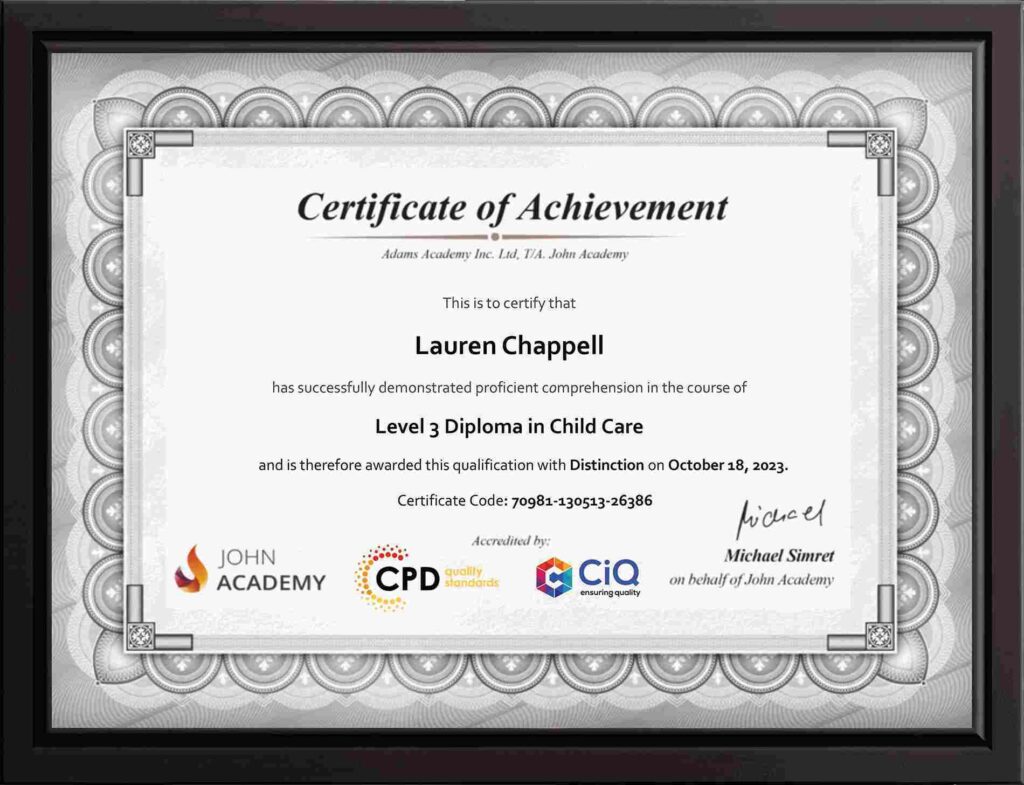
- After you have successfully completed the course, you will be able to obtain an Accredited Certificate of Achievement. You can however also obtain a Course Completion Certificate following the course completion without sitting for the test. Certificates can be obtained either in hardcopy at the cost of £39 or in PDF format at the cost of £24.
- PDF certificate’s turnaround time is 24 hours, and for the hardcopy certificate, it is 3-9 working days.
Why choose us?
- Affordable, engaging & high-quality e-learning study materials;
- Tutorial videos/materials from the industry-leading experts;
- Study in a user-friendly, advanced online learning platform;
- Efficient exam systems for the assessment and instant result;
- The UK & internationally recognized accredited qualification;
- Access to course content on mobile, tablet or desktop from anywhere anytime;
- The benefit of career advancement opportunities;
- 24/7 student support via email.
Career Path
The SENCO – Special Educational Needs Coordination Certification Course is a useful qualification to possess and would be beneficial for any related profession or industry such as:
- SENCO
- SEN Teaching Assistant
- Teaching Assistant
-
 Module 1: Introduction to SEN Co-ordination 00:14:00
 -
Module 2: The SENCO Role in Policy and Practice 00:13:00
-
Module 3: Roles and Responsibilities within whole School SEN Co-ordination 00:13:00
-
Module 4: Supporting Teaching and Learning 00:23:00
-
Module 5: The SENCO and the Senior Leadership Team 00:15:00
-
Module 6: Supporting Colleagues and working with Professionals and Organisations beyond the School 00:23:00
-
Module 7: Developing Relationship with Pupils and Parents 00:20:00
-
Module 8: SENCO’s Role in Leading and Managing SEND Administration 00:18:00
-
Module 9: Challenges and Opportunities 00:17:00
-
Module 10: Developing Inclusive Practice and the Future SENCO Role 00:14:00
-
Order Your Certificates and Transcripts
What Our Students are Saying

Sam Carpenter
John Academy has helped me in my development, and I took the courses seriously and gained a qualifications certificate, which I've wanted to do for a long time. I highly recommend it, and a few friends have signed up, too. Thank you, John Academy.
Georgina Salazar
Easy to access, generous options for multiple learning and approaches. Supportive team.
Wayne Wright
The course empowers me to make my dreams come true. The course material was excellent. John Academy is good to study.
Romina
I am thankful that I have chosen John Academy for my online courses. It has given me a platform where I have learned a lot. It has so many reading materials with a handful of knowledge. Once again, thank you so much to the John Academy support team, who has cooperated & supported me throughout this journey.
Peter Gilbert
Brilliant course, with so many to choose from, very good value and a certificate at the end. Quick turnaround to receive a certificate. Very good academy I have completed several and have 2 ongoing at the moment. Never had any problems. Excellent customer service. Would recommend.

Other Students Also Bought