Freight Broker Training
The logistics and transportation industry plays a vital role in global trade, connecting businesses, suppliers, and customers across national and …
 1422 Students

Save 93.15 % - Offer ENDS SOON

 Access All Courses for Only £49
 14-Day Money-Back Guarantee
-
1 Year Access
 -
IntermediateSkill Level -
2 hours, 25 minutesDuration
 Access
 Skill Level
 Duration
Freight Broker Training
Join thousands of learners building a successful career

Course Curriculum
-
Module 01: Introduction To Freight Brokerage 00:12:00
 Module 01: Introduction To Freight Brokerage
 -
Module 02: Regulatory and Legal Requirements 00:14:00
-
Module 03: Freight Broker Operations 00:18:00
-
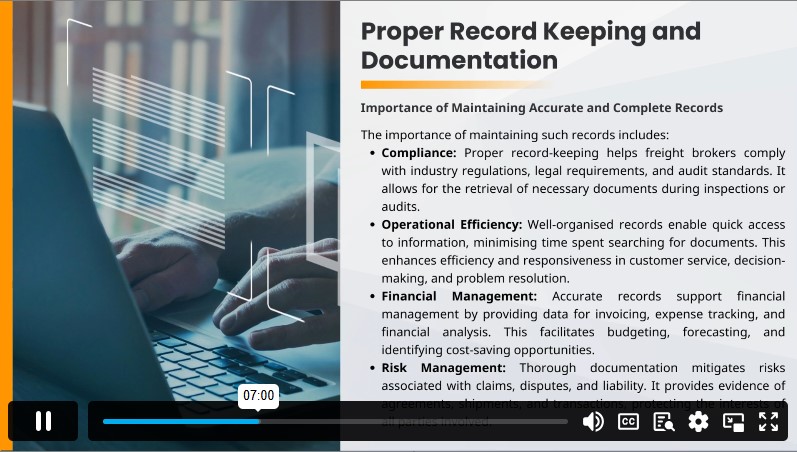
Module 04: Documentation and Record Keeping 00:21:00
-
Module 05: Carrier Selection and Qualification 00:19:00
-
Module 06: Freight Transportation Modes 00:25:00
-
Module 07: Freight Broker Marketing and Sales 00:16:00
-
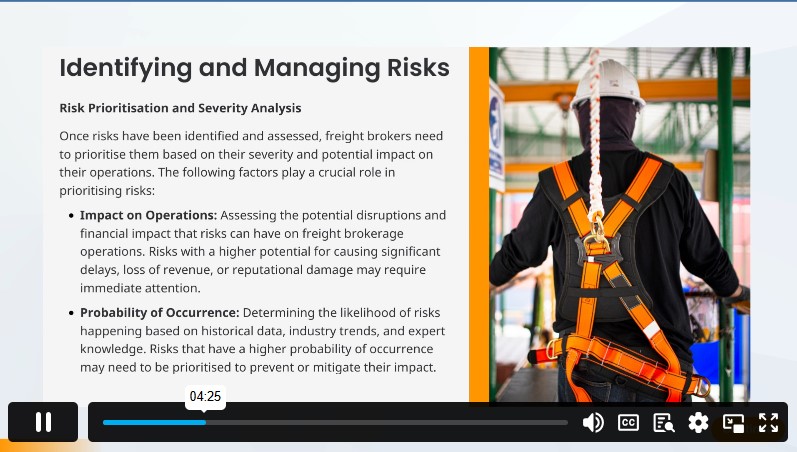
Module 08: Risk Management and Problem-Solving 00:20:00
-
Order Your Certificates and Transcripts
-
Share your Feedback
Frequently Asked Questions
A freight broker connects shippers with carriers to transport goods efficiently. They negotiate rates, arrange shipments, ensure compliance with regulations, and manage communication between both parties to ensure timely and cost-effective delivery of freight.
Starting a freight broker career involves completing freight broker training, understanding regulations, obtaining necessary licensing or authority, building carrier networks, and developing sales and communication skills to successfully match loads with transport providers.
Essential skills include negotiation, communication, sales ability, logistics knowledge, problem-solving, and attention to detail. Freight brokers must also understand transportation regulations, carrier management, and customer service to ensure efficient freight movement.
Freight brokerage operations involve sourcing loads, matching them with carriers, negotiating rates, managing documentation, tracking shipments, and ensuring compliance. Efficient operations help maintain strong relationships and ensure smooth transportation of goods.
Freight broker marketing focuses on finding shippers, building carrier networks, and promoting services through calls, emails, and digital outreach. Strong sales strategies help brokers secure consistent freight opportunities and grow their business.