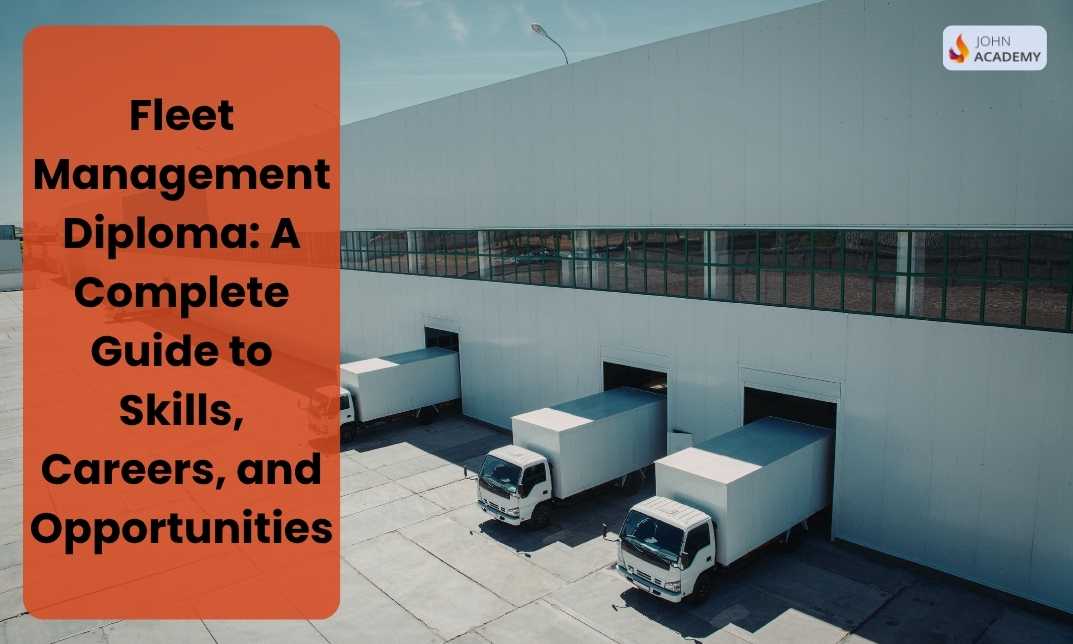
Fleet Management Diploma: A Complete Guide to Skills, Careers, and Opportunities
The Fleet Management Diploma is designed for individuals who want to understand how vehicle fleets are planned, operated, and controlled across a wide range of industries. From logistics and construction to public services and corporate transport, fleets play a critical role in keeping organisations moving efficiently and safely. As businesses place greater emphasis on cost control, compliance, and sustainability, skilled fleet management has become increasingly important.
This diploma provides structured theoretical knowledge covering fleet operations, vehicle lifecycle management, compliance awareness, and performance optimisation. It is suitable for beginners, career changers, supervisors, and professionals looking to strengthen their understanding of fleet operations and transport management.
What Is Fleet Management
Fleet management involves overseeing a group of vehicles used for business or organisational purposes. This includes cars, vans, trucks, and specialist vehicles. Effective fleet management ensures vehicles are safe, reliable, cost-effective, and compliant with legal and operational requirements.
The Fleet Management Diploma explains the core principles behind fleet operations, including vehicle acquisition, utilisation, maintenance planning, and end-of-life replacement. Learners gain insight into how these elements work together to support efficient transport services.
Key Responsibilities of a Fleet Manager
Fleet managers are responsible for balancing operational efficiency with safety, compliance, and cost control. Typical responsibilities include scheduling maintenance, monitoring vehicle usage, managing fuel costs, ensuring driver compliance, and maintaining accurate records.
This diploma helps learners understand how fleet managers make informed decisions using data, policies, and performance indicators. Emphasis is placed on organisation, communication, and planning skills that support effective fleet oversight.
Fleet Maintenance and Vehicle Lifecycle Management
Regular maintenance is essential to keep fleets safe and operational. The Fleet Management Diploma introduces maintenance planning concepts, inspection schedules, and the importance of preventative maintenance in reducing downtime and repair costs.
Learners also explore vehicle lifecycle management, including procurement decisions, depreciation awareness, and replacement planning. Understanding when to repair, upgrade, or replace vehicles helps organisations manage budgets and maintain reliable fleets.


Compliance, Safety, and Risk Awareness
Fleet operations are governed by legal and regulatory requirements relating to vehicle safety, roadworthiness, emissions, and driver responsibilities. Non-compliance can lead to penalties, operational disruption, and reputational damage.
This diploma explains the importance of compliance awareness and risk management within fleet operations. Learners gain understanding of safety policies, inspection requirements, and the role of documentation in demonstrating compliance and accountability.
Cost Control and Performance Optimisation
Managing fleet costs is a key focus of fleet management. Expenses such as fuel, maintenance, insurance, and vehicle depreciation can significantly impact organisational budgets.
The Fleet Management Diploma explores cost control strategies, including efficient scheduling, fuel usage monitoring, and performance analysis. Learners gain awareness of how data and reporting support informed decision-making and continuous improvement.
Technology and Modern Fleet Operations
Technology plays an increasingly important role in fleet management. Vehicle tracking, telematics, and digital reporting tools help organisations monitor performance, improve efficiency, and support compliance.
This diploma introduces learners to the role of technology in modern fleet operations, explaining how data can be used to improve route planning, vehicle utilisation, and safety outcomes. Understanding these tools helps learners stay aligned with current industry practices.
Who Should Study the Fleet Management Diploma
This diploma is suitable for:
- Individuals interested in transport or logistics roles
- Fleet supervisors and coordinators
- Operations and facilities staff
- Career changers seeking management-focused skills
- Professionals looking to strengthen fleet knowledge
No prior fleet management experience is required, as the course explains concepts clearly and progressively.
Career Opportunities in Fleet Management
Completing a Fleet Management Diploma can support career progression into a variety of roles. Common opportunities include fleet administrator, fleet coordinator, transport supervisor, operations assistant, and fleet manager.
Fleet management skills are transferable across industries, including logistics, construction, utilities, public services, and corporate organisations. With experience and further training, learners may progress into senior operational or transport management roles.
Conclusion
The Fleet Management Diploma offers a comprehensive introduction to the skills and knowledge needed to manage vehicle fleets effectively. By covering operations, maintenance, compliance, cost control, and technology, the course prepares learners for a wide range of opportunities in transport and fleet-based roles. Whether you are starting a new career or strengthening existing operational knowledge, this diploma provides a strong foundation for success in modern fleet management.
The diploma focuses on fleet operations, vehicle maintenance planning, compliance awareness, cost control, and performance management.
Yes. The Fleet Management Diploma is designed for beginners and does not require prior experience in transport or fleet roles.
The course focuses on theoretical knowledge and operational understanding. Practical experience should be gained separately in the workplace.
Fleet management skills are used in logistics, construction, healthcare, utilities, public services, retail, and corporate transport operations.
Yes. The diploma provides foundational knowledge that supports progression into supervisory and management-level roles within fleet and transport operations.
Yes. As organisations focus on efficiency, sustainability, and compliance, demand for skilled fleet management professionals continues to grow.
Course Categories
- Accounting & Finance
- Animal Care
- Beauty & Wellness
- Business
- Business & Management
- Career Bundles
- Employability
- English Language / Adult Education
- Finance
- Health & Fitness
- Healthcare, Safety & Fitness
- Hospitality
- HR and Leadership
- interactive course
- IT & Development
- IT, Software & Technology
- Job Ready Programme
- Language
- Lifestyle
- Management
- Marketing
- Personal Development
- Photography & Video
- Project Management
- Psychology
- Security
- Sports
- Teaching & Education
- Technology
- Therapy
- Web Development