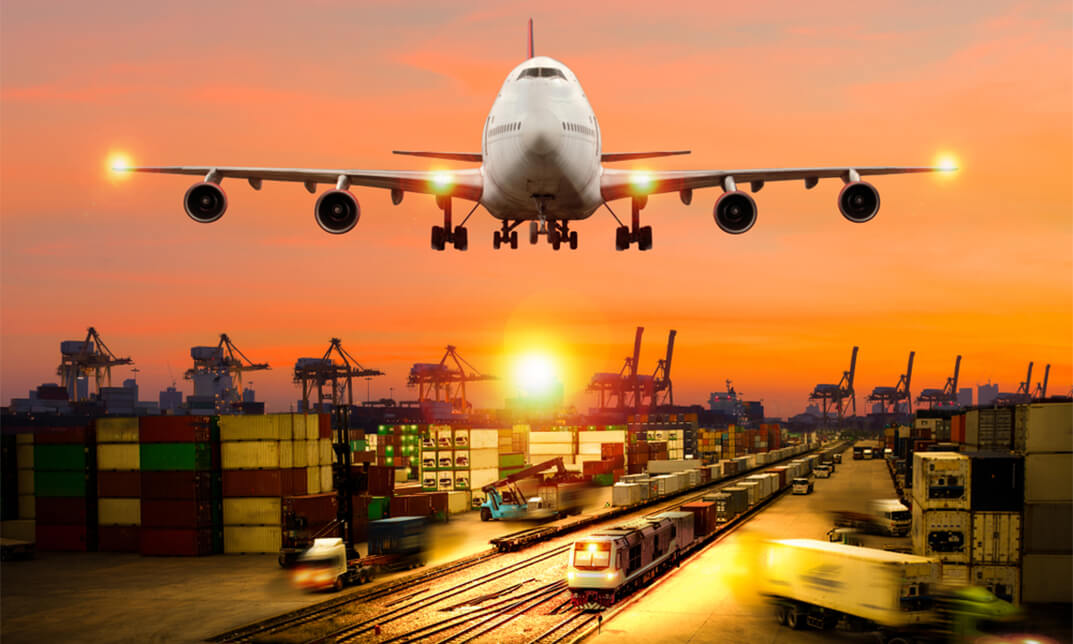
Diploma in Transport Management

The transport sector encompasses road, rail, air, maritime, and inland waterway transport, each requiring specialised planning and management practices. As …

(463 Reviews)

stds1174 Students

logo

Get access to 3000+ courses including this for a year only at £49. GET NOW

Diploma in Transport Management

Diploma in Transport Management

Join thousands of learners building a successful career
14-Day Money-Back Guarantee

The transport sector encompasses road, rail, air, maritime, and inland waterway transport, each requiring specialised planning and management practices. As transport networks continue to evolve through technological advancements, digitalisation, sustainability initiatives, and integrated logistics systems, knowledge of transport management remains relevant across a wide range of industries.

This Diploma in Transport Management provides learners with a broad understanding of transport operations, infrastructure management, freight transportation, passenger transport services, health and safety requirements, and transportation management systems. The course also introduces learners to transportation planning within enterprise resource planning environments, including transportation management software used to coordinate logistics and freight movements.

Course Overview

The Diploma in Transport Management offers a structured introduction to the principles and practices involved in managing transportation systems and logistics operations. The course examines how transport networks support businesses, communities, and national infrastructure while exploring the operational requirements of various transport sectors.

Learners will gain knowledge of road transport, rail services, freight operations, passenger transportation, ports, inland waterways, and airline transport systems. The course explains how transport managers coordinate resources, monitor performance, address operational challenges, and maintain compliance with industry regulations.

In addition to traditional transport management concepts, the course explores transportation planning within integrated business environments. Learners will develop an understanding of transportation management software, shipment planning processes, freight execution, transportation workflows, and logistics coordination activities.

The course also examines current trends affecting the transport industry, including technological developments, sustainability considerations, changing consumer demands, regulatory requirements, and emerging operational challenges.

This programme is suitable for individuals interested in transport operations, logistics coordination, fleet management, supply chain support, and transportation planning across public and private sector organisations.

Learning Outcomes

Upon successful completion of the Diploma in Transport Management, learners will be able to:

  • Understand the principles and functions of transport management within modern economies.
  • Identify the roles and responsibilities of transport managers across different transport sectors.
  • Explain the structure and importance of road, rail, air, and maritime transport networks.
  • Understand freight transportation processes and logistics coordination activities.
  • Recognise the operational requirements of passenger transport services.
  • Understand transportation planning and shipment management processes.
  • Identify common challenges affecting transport operations and supply chains.
  • Understand health and safety requirements within transportation environments.
  • Develop knowledge of transportation management systems and digital transport processes.
  • Recognise industry trends, regulatory considerations, and best practices in transport management.

Why Study Transport Management?

Transport management supports the efficient movement of goods and passengers throughout national and international transport networks. Organisations rely on effective transport planning to maintain supply chains, meet customer requirements, reduce operational costs, and comply with transportation regulations.

Understanding transport management can be beneficial for individuals involved in logistics, distribution, supply chain operations, fleet administration, freight forwarding, passenger transport services, and transportation planning. Knowledge of transportation systems also provides insight into how businesses coordinate movement across multiple transport modes and geographic regions.

The course offers an overview of operational processes, infrastructure considerations, transportation technologies, and management principles relevant to modern transport environments.

Who is this course for?

This course may be suitable for:

  • Individuals interested in transport and logistics operations.
  • Transport coordinators and administrative staff.
  • Supply chain and logistics professionals.
  • Fleet management personnel.
  • Freight and distribution support staff.
  • Warehouse and logistics administrators.
  • Operations coordinators seeking transport knowledge.
  • Learners interested in transportation planning and management systems.

The course is designed for both beginners and individuals seeking to expand their understanding of transport management practices.

Assessment Method

Assessment is conducted through an automated multiple-choice examination designed to evaluate understanding of the key concepts covered throughout the course.

Learners are required to achieve the minimum pass mark specified by the course provider in order to complete the assessment successfully.

Reflective learning exercises may also be provided to support understanding and encourage the application of transport management principles.

Who is this Course for?

Diploma in Transport Management is certified by CPD Qualifications Standards and CiQ. This makes it perfect for anyone trying to learn potential professional skills.

As there is no experience and qualification required for this course, it is available for all students from any academic background.

Requirements

Our Diploma in Transport Management is fully compatible with any kind of device. Whether you are using Windows computer, Mac, smartphones or tablets, you will get the same experience while learning. Besides that, you will be able to access the course with any kind of internet connection from anywhere at any time without any kind of limitation.

Certification

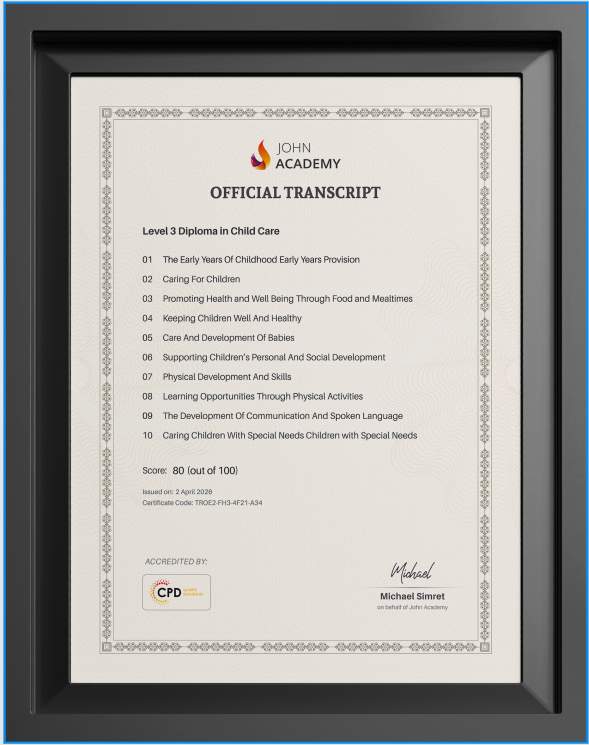
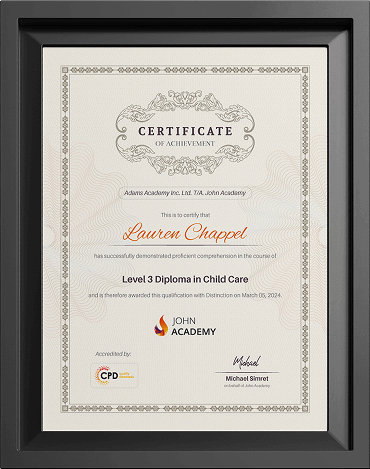
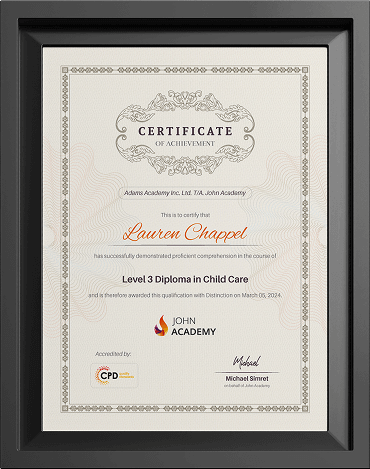
Upon successful completion of the course and assessment requirements, learners will receive a course certificate recognising their achievement.

The certificate demonstrates knowledge of transport management principles, transportation systems, logistics operations, freight coordination, transport planning, and transportation management processes.

Certification can be used as evidence of continuing professional development and may support further learning within transport, logistics, and supply chain disciplines.

John-Certificate-MockupJohn-Certificate-Mockup

Career Path​

Knowledge gained from the Diploma in Transport Management may support progression into a variety of transport, logistics, and supply chain-related roles.

  • Transport Manager – £30,000 to £55,000 annually

Oversee transport operations, fleet management, route planning, and regulatory compliance.

  • Logistics Coordinator – £24,000 to £40,000 annually

Coordinate transportation activities, shipments, inventory movement, and logistics schedules.

  • Fleet Manager – £30,000 to £50,000 annually

Manage vehicle fleets, maintenance programmes, driver operations, and transport performance.

  • Distribution Manager – £35,000 to £60,000 annually

Supervise distribution networks and coordinate the movement of products across supply chains.

  • Transport Planner – £28,000 to £50,000 annually

Develop transportation plans, route optimisation strategies, and infrastructure support solutions.

  • Freight Operations Coordinator – £25,000 to £42,000 annually

Manage freight movements, shipment schedules, transportation documentation, and carrier relationships.

  • Supply Chain Coordinator – £25,000 to £45,000 annually

Support procurement, logistics planning, transportation activities, and inventory management.

  • Logistics Administrator – £22,000 to £35,000 annually

Provide administrative support for transportation operations, scheduling, reporting, and compliance activities.

Diploma in Transport Management

Excellent
Based on
463 Reviews
Sarah Mitchell GB

Gain transport planning, logistics, and fleet management skills with a Diploma in Transport Management online.

Course Curriculum

  • video  An Introduction to Successful Transport Management
    01:00:00
  • video The UK’s Travel Infrastructure – Road and Rail
    00:45:00
  • video Road Freight and Transport Management
    01:15:00
  • video Passenger Road Transport and its Management
    01:15:00
  • video Rail and Transport Management
    00:30:00
  • video Transport Management for Ports and Inland Waters
    00:30:00
  • video Transport Management for Airlines
    00:30:00
  • video Trends, Challenges and Best Practice in Transport Management
    00:15:00
  • video Transport Management and Health and Safety
    00:30:00

Frequently Asked Questions

1. What is transport management in logistics?

Transport management involves planning, executing, and optimising the movement of goods and passengers across road, rail, air, and waterways. It ensures efficient delivery, cost control, safety compliance, and smooth coordination within the supply chain system.

2. What skills are needed in transport management jobs?

Transport management jobs require skills in logistics planning, scheduling, route optimisation, cost control, communication, health and safety compliance, and problem-solving to ensure efficient and reliable movement of goods and passengers.

3. What does a transport management course teach?

A transport management course covers logistics operations, road and rail systems, freight management, passenger transport, safety regulations, global transport trends, and SAP Transportation Management for end-to-end supply chain efficiency and control.

4. How does SAP Transportation Management work?

SAP Transportation Management integrates planning, execution, and freight tracking. It automates shipment processes, optimises routes, manages air and domestic transport scenarios, and improves order fulfilment accuracy and operational efficiency across supply chains.

5. What are challenges in transport management today?

Key challenges include rising fuel costs, regulatory compliance, safety risks, infrastructure limitations, and supply chain disruptions. Effective transport management uses technology, planning, and optimisation strategies to overcome these challenges and improve efficiency.