Level 3 HACCP Training For Catering & Retail

Effective food safety management is essential for every catering, hospitality, retail, and food service business. Organisations that handle, prepare, store, …

(736 Reviews)

stds1578 Students

logo

Get access to 3000+ courses including this for a year only at £49. GET NOW

Level 3 HACCP Training For Catering & Retail

Join thousands of learners building a successful career
14-Day Money-Back Guarantee

Effective food safety management is essential for every catering, hospitality, retail, and food service business. Organisations that handle, prepare, store, or sell food must implement robust food safety procedures to protect consumers, comply with legal requirements, and maintain high operational standards. The Level 3 HACCP Training For Catering & Retail course is designed to provide learners with the knowledge and practical understanding required to develop, implement, and manage Hazard Analysis and Critical Control Point (HACCP) systems within food-related environments.

Whether you are a food business owner, supervisor, manager, chef, catering professional, or retail food handler, this course offers comprehensive training in HACCP principles and food safety management. It focuses on identifying food safety hazards, controlling risks, ensuring legal compliance, and maintaining high standards of food hygiene throughout the food production and supply process.

Course Overview

The Level 3 HACCP Training for Catering & Retail course gives learners a solid understanding of how food safety is managed in catering and retail environments using the HACCP system. It explains how businesses can identify potential food safety risks, prevent contamination, and meet legal requirements by applying practical control measures. Throughout the course, learners explore different types of hazards, including biological, chemical, physical, and allergen-related risks, and learn how to manage them effectively. The training also covers the seven core HACCP principles, helping participants understand how to identify critical control points, monitor food safety procedures, take corrective action when needed, and maintain accurate records. In addition, it highlights the importance of verification processes, staff responsibilities, and management involvement in creating a strong food safety culture. 

By combining practical examples with essential theory, the course equips learners with the knowledge and confidence to support food safety management across catering, hospitality, manufacturing, and retail settings.

Course Preview

Learning Outcomes

By completing this Level 3 HACCP Training For Catering & Retail course, you will be able to:

  • Understand the purpose and importance of HACCP within food safety management systems.
  • Explain food safety legislation and regulatory requirements relevant to catering and retail environments.
  • Identify biological, chemical, physical, and allergen food safety hazards.
  • Conduct effective hazard analysis to assess potential food safety risks.
  • Understand the seven principles of HACCP and their practical application.
  • Identify and establish critical control points within food handling processes.
  • Develop critical limits and monitoring procedures to control food safety risks.
  • Implement corrective actions when food safety standards are not met.
  • Maintain accurate HACCP documentation and verification records.
  • Contribute to the development, implementation, and continuous improvement of HACCP systems within food businesses.

Why Enrol in This Course?

Food safety is a legal and operational priority for businesses involved in food preparation, storage, distribution, and retail. The demand for professionals with knowledge of HACCP Training For Catering & Retail continues to grow as organisations seek to maintain compliance and protect consumer health.

Key benefits of this course include:

  • Gain a recognised understanding of HACCP principles and food safety management.
  • Learn how to identify and control food safety hazards effectively.
  • Improve compliance with food safety legislation and industry standards.
  • Develop skills required for supervisory and management-level food safety responsibilities.
  • Enhance workplace food safety procedures and risk management practices.
  • Improve confidence in implementing HACCP systems within catering and retail environments.
  • Strengthen your professional profile within the food and hospitality sectors.
  • Study online at your own pace with flexible access to learning materials.

This course is ideal for individuals seeking to advance their food safety knowledge and support high standards of food hygiene and compliance.

Who is this course for?

This Level 3 HACCP Training For Catering & Retail course is suitable for a wide range of learners, including:

  • Food business owners and operators.
  • Catering managers and supervisors.
  • Restaurant, café, and hospitality professionals.
  • Retail food managers and team leaders.
  • Food production and manufacturing supervisors.
  • Quality assurance and food safety personnel.
  • Chefs, cooks, and kitchen managers.
  • Individuals responsible for implementing HACCP systems.
  • Anyone seeking advanced food safety and compliance knowledge.

Whether you are currently working within the food industry or looking to progress into supervisory roles, this course provides valuable and practical food safety expertise.

Prerequisites

There are no formal entry requirements for this course. It is designed to be accessible to learners from various professional backgrounds.

However, the following may be beneficial:

  • Basic understanding of food hygiene and food safety practices.
  • Interest in catering, hospitality, food retail, or food production.
  • Desire to develop food safety management and compliance skills.
  • Previous food handling experience may be helpful but is not required.

This makes the course suitable for both experienced professionals and learners seeking to enhance their qualifications.

Certification

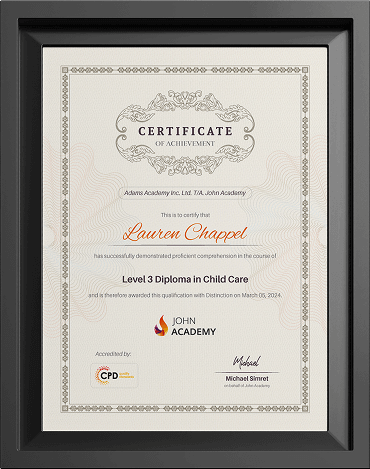
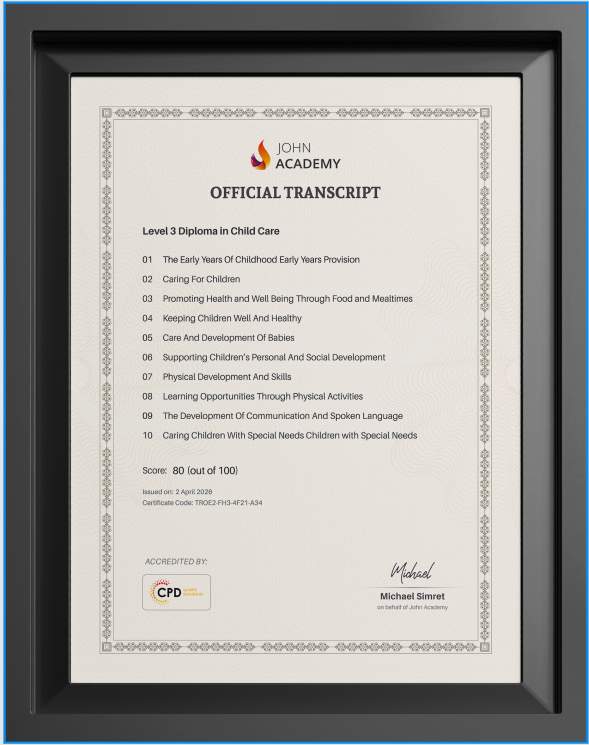
After successfully completing this course, you will receive an Accredited Certificate of Achievement endorsed by CPD, UKRLP, AoHT, and Incensu. Certificates and transcripts are available in:

  • PDF format for £11.99
  • Hard copy for £14.99

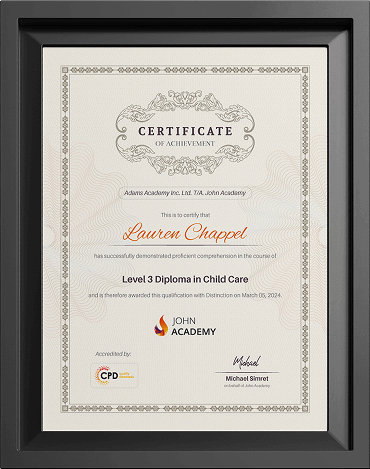
John-Certificate-MockupJohn-Certificate-Mockup

Career Path​

Completing this course can support career advancement across a wide range of food industry roles where food safety management and HACCP knowledge are essential.

Potential career opportunities include:

  • Food Safety Supervisor – £24,000 to £38,000 annually

Monitor food safety procedures, ensure compliance, and support HACCP implementation.

  • Catering Manager – £28,000 to £45,000 annually

Oversee catering operations while maintaining food safety and hygiene standards.

  • Restaurant Manager – £27,000 to £50,000 annually

Manage food service operations, staff, and regulatory compliance requirements.

  • Quality Assurance Officer – £28,000 to £45,000 annually

Monitor food quality systems, conduct audits, and ensure HACCP compliance.

  • Food Production Supervisor – £30,000 to £48,000 annually

Manage production processes while maintaining food safety standards.

  • Food Safety Coordinator – £30,000 to £50,000 annually

Develop, monitor, and improve HACCP systems across food businesses.

  • Hospitality Operations Manager – £35,000 to £60,000 annually

Lead hospitality operations with responsibility for food safety management and compliance.

Level 3 HACCP Training For Catering & Retail

Excellent
Based on
736 Reviews
Charlotte Evans GB

An excellent course with clear and practical guidance on HACCP procedures. The content was easy to follow, and I now feel much more confident managing food safety in a catering setting.

Course Curriculum

  • video Module 01: An Introduction to HACCP
    00:15:00
  • video Module 02: HACCP and Food Safety Legislation
    00:25:00
  • video Module 03: Food Safety Hazards
    01:00:00
  • video Module 04: Planning a HACCP System
    00:40:00
  • video Module 05: Creating the HACCP System
    00:20:00
  • video Module 06: Principle 1 – Hazard Analysis
    00:15:00
  • video Module 07: Principle 2 – Critical Control Points
    00:12:00
  • video Module 08: Principle 3 – Critical Limits
    00:20:00
  • video Module 09: Principle 4 – Monitoring Critical Control Points
    00:20:00
  • video Module 10: Principle 5 – Corrective Action
    00:25:00
  • video Module 11: Principle 6 – Verification of the HACCP System
    00:30:00
  • video Module 12: Principle 7 – Documentation
    00:16:00
  • video Module 13: Implementing the HACCP System
    00:12:00
  • video Module 14: HACCP Alternatives
    00:15:00

Frequently Asked Questions

1. What is HACCP and why is it important?

HACCP (Hazard Analysis and Critical Control Points) is a food safety management system that identifies, evaluates, and controls food safety hazards. It helps businesses prevent contamination, comply with regulations, and maintain high standards of food safety.

2. What are the seven HACCP principles?

The seven HACCP principles include hazard analysis, identifying critical control points, establishing critical limits, monitoring procedures, corrective actions, verification activities, and documentation. Together, these principles create a structured approach to managing food safety risks effectively.

3. How do you identify food safety hazards?

Food safety hazards are identified by assessing biological, chemical, and physical risks throughout food preparation, storage, and distribution. A thorough hazard analysis helps businesses prevent contamination and maintain safe food handling practices.

4. What are Critical Control Points in HACCP?

Critical Control Points (CCPs) are stages in the food process where controls can be applied to prevent, eliminate, or reduce food safety hazards. Monitoring CCPs helps ensure food remains safe for consumption at every stage.

5. How do you implement a HACCP system?

Implementing a HACCP system involves conducting hazard analysis, establishing control measures, training staff, monitoring critical points, maintaining records, and regularly reviewing procedures. This ensures compliance with food safety regulations and continuous improvement in operations.