Nursing Assistant Diploma
Nursing Assistant Diploma Course Overview Step confidently into the healthcare profession with our Nursing Assistant Diploma, a complete training solution …
 1618 Students


Save 93.15 % - Offer ENDS SOON

 Access All Courses for Only £49
 14-Day Money-Back Guarantee
-
1 Year Access
 -
DiplomaSkill Level -
8 hours, 31 minutesDuration
 Access
 Skill Level
 Duration
Nursing Assistant Diploma
Join thousands of learners building a successful career


Following 2 Courses are Included With This Course (For Free) - Limited Time!


Preventing Contamination in the Laboratory

Laboratory Analyst Course
Career Path
Completing this Nursing Assistant Diploma opens the door to a variety of career opportunities within the healthcare sector. Whether you’re aiming to become a certified nurses assistant or seeking to grow within your current role, this nursing assistant course equips you with the skills and confidence employers value.
Course Curriculum
-
Introduction to Nursing 00:15:00
 Introduction to Nursing
 -
Working in Different Healthcare Settings 00:13:00
-
Legal, Standards and Professional Aspects of Ethical Practice: Part – 1 00:50:00
-
Legal, Standards and Professional Aspects of Ethical Practice: Part – 2 00:48:00
-
Effective Communication in Nursing 00:45:00
-
Health and Safety in Nursing 00:45:00
-
Hygiene in Nursing 00:28:00
-
Infection Control 00:58:00
-
Asepsis in Nursing 00:14:00
-
Medication Administration in Nursing 00:16:00
-
Understanding the Immune System in Nursing 00:26:00
-
Rest and Sleep Management in Nursing 00:17:00
-
Mobility and Immobility Issues of Patients in Nursing 00:15:00
-
Pain Management for Nurses 00:23:00
-
Nutrition in Nursing 00:22:00
-
Fluid and Electrolyte Balance 00:21:00
-
Assisting with Elimination 00:27:00
-
Oxygenation in Nursing 00:28:00
-
Assignment – Nursing Assistant Diploma
-
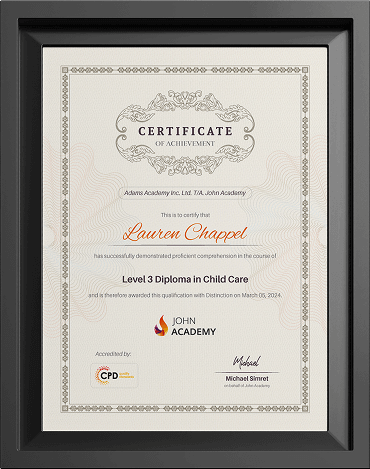
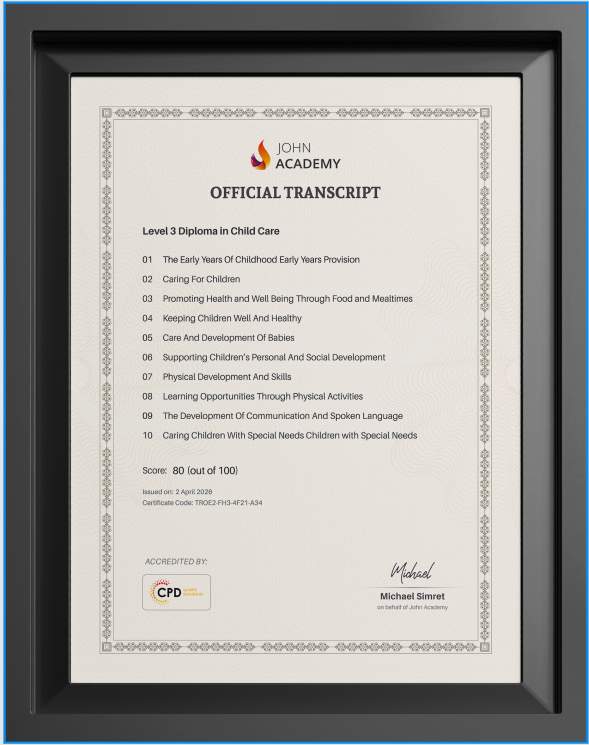
Order Your Certificates and Transcripts
-
Share your Feedback
Frequently Asked Questions
In this course, learners will explore various critical topics such as patient care, hygiene, infection control, and legal standards. With an increasing demand for skilled healthcare workers, this course offers you a solid foundation to begin or advance your career in nursing support roles.
Nursing assistants typically need good literacy/numeracy skills, a caring attitude, and often a relevant qualification like a Level 3 Diploma or the Care Certificate to work in the UK. While formal academic qualifications are not always required for entry-level roles, specialized training in patient care, infection control, and health and safety is necessary for certification.
The Registered General Nurse with the qualification Diploma in Nursing will have the necessary knowledge and skills to render nursing care to patients with a wide range of conditions in a variety of healthcare settings and manage a nursing unit.
Every job, no matter how fulfilling, can be a source of stress at times. Nursing assistants can face demanding physical and emotional challenges that include long hours, heavy workloads and the constant care of patients.
How much do nursing assistants in London get paid? nursing assistant salaries can range between £10.00-17.71 per hour in the London area.