Urban Farming and Gardening Course
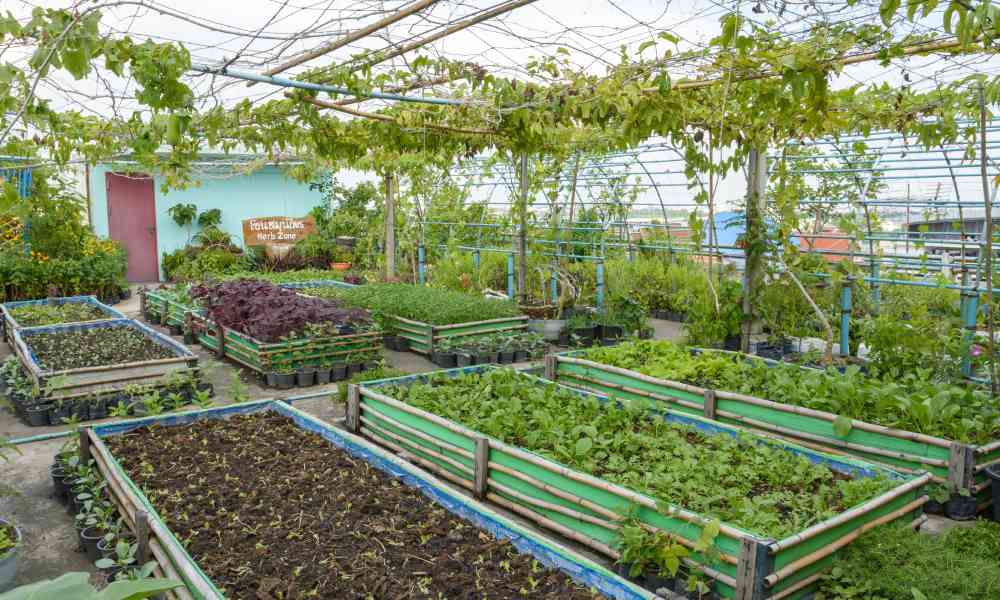
Urban Farming and Gardening is becoming increasingly important in today’s world as cities grow and demand for sustainable food systems …
 1361 Students

Save 92.86 % - Offer ENDS SOON

 Access All Courses for Only £49
 14-Day Money-Back Guarantee
-
1 Year Access
 -
IntermediateSkill Level -
1 hour, 56 minutesDuration
 Access
 Skill Level
 Duration
Urban Farming and Gardening Course
Join thousands of learners building a successful career


Course Curriculum
-
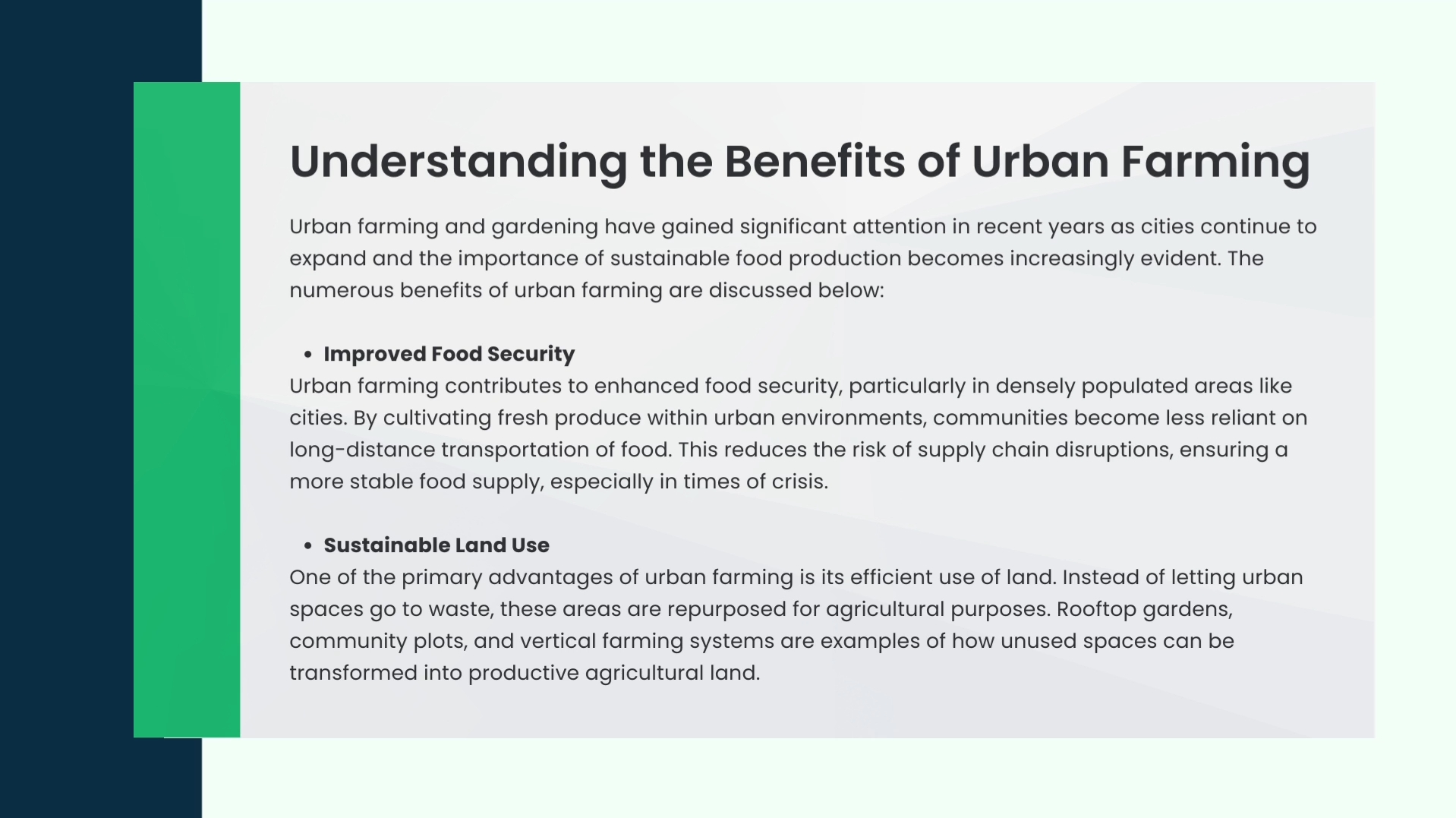
Module 01: Introduction to Urban Farming and Gardening 00:15:00
 Module 01: Introduction to Urban Farming and Gardening
 -
Module 02: Essential Gardening Tools and Equipment 00:15:00
-
Module 03: Planning and Budgeting for Urban Farming 00:14:00
-
Module 04: Soil Preparation and Planting Techniques 00:14:00
-
Module 05: Pest Management and Plant Health 00:15:00
-
Module 06: Sustainable Practices in Urban Farming 00:14:00
-
Module 07: Plant Care and Harvesting 00:14:00
-
Module 08: Design and Construction for Urban Gardens 00:15:00
-
Order Your Certificates and Transcripts
Frequently Asked Questions
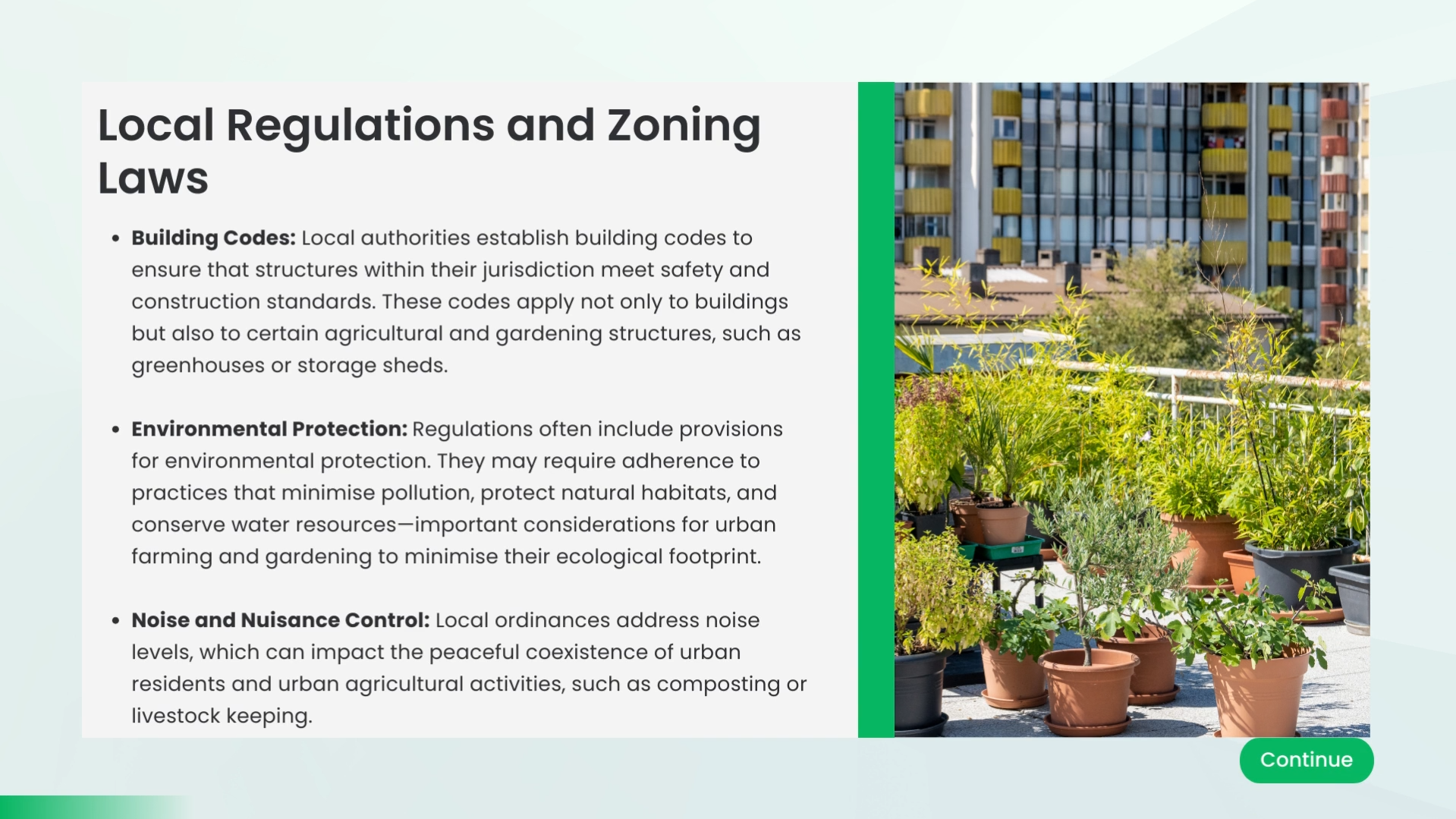
Urban farming is the practice of growing food in cities using small spaces like rooftops, balconies, and community gardens. It uses containers, vertical systems, and sustainable methods to produce vegetables, herbs, and fruits locally and efficiently.
An urban gardening course teaches soil preparation, container gardening, plant selection, composting, watering techniques, and pest control. It also covers space optimization methods to grow healthy crops in limited urban environments effectively and sustainably.
You can start urban farming by selecting a small space like a balcony or rooftop, choosing suitable crops, using containers or raised beds, preparing soil, and maintaining proper watering, sunlight exposure, and organic fertilization methods.
Urban farming improves food security, reduces grocery costs, and promotes healthy eating. It also reduces environmental impact, improves air quality, encourages sustainability, and provides mental health benefits through gardening and connection with nature.
Leafy greens, tomatoes, peppers, herbs, strawberries, and root vegetables grow well in urban spaces. These crops require limited space, grow quickly, and adapt easily to container gardening, vertical systems, and rooftop environments.