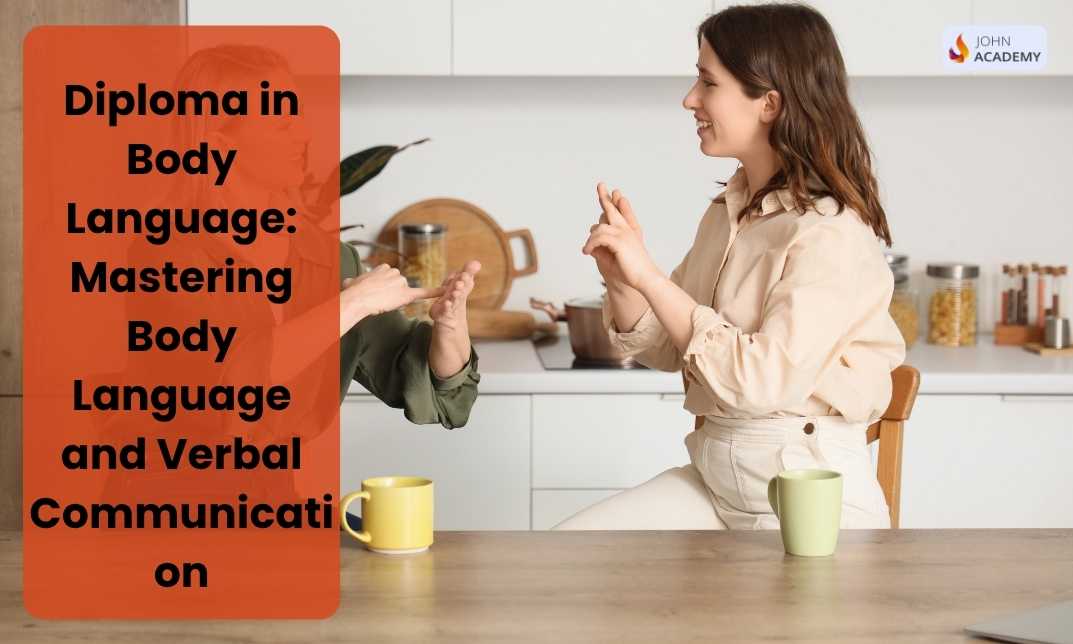
Diploma in Body Language: Mastering Body Language and Verbal Communication
The Diploma in Body Language is designed for individuals who want to understand how nonverbal cues influence communication, relationships, and professional success. Communication is not only about what we say but also how we say it. Facial expressions, posture, gestures, tone of voice, and eye contact all play a powerful role in shaping messages. Understanding body language and verbal communicatio is essential for building confidence, improving relationships, and enhancing professional interactions.
This diploma provides structured knowledge of both verbal and nonverbal communication, helping learners interpret signals accurately and communicate more effectively in personal and workplace settings.
Understanding Body Language and Verbal Communication
Every discussion carries two layers of meaning: the words you speak and the silent signals your body sends. Research suggests that verbal cues, including facial expressions, posture, and gestures, frequently carry further weight than spoken words alone. The Diploma in Body Language helps you crack both layers, giving you a complete picture of what’s truly being communicated.
Through this course, learners develop the capability to read tone of voice, interpret hand gestures, assess posture, and recognise micro-expressions in real time. These choices allow you to communicate with less clarity, respond more empathetically, and avoid the expensive misconstructions that arise when words and body language contradict each other.
Key Elements of Body Language
The course introduces learners to the main components of body language, including:
- Facial expressions and micro-expressions
- Eye contact and gaze patterns
- Posture and physical stance
- Hand gestures and arm positioning
- Personal space and proximity
Understanding these elements helps learners interpret nonverbal cues in social, professional, and public speaking situations.
Improving Verbal Communication Skills
Strong verbal communication is the foundation of every meaningful commerce. The Diploma in Body Language teaches learners how to structure speech easily, use tone effectively, and design confidence, whether in job interviews, donations, or everyday exchanges.
When spoken words and verbal signals align, the communication becomes far more satisfying and secure. This course helps learners master that alignment, so their voice, posture, and expressions all work together to leave a lasting, positive impression. Developing these combined chops is essential for career growth, leadership, and erecting genuine mortal connections.


Body Language in Professional Settings
In competitive business and leadership surroundings, the way you carry yourself can be just as important as your qualifications. From job interviews and customer donations to payment accommodations and platoon meetings, verbal communication frequently determines how confident, secure, and authoritative you appear to others.
This parchment equips learners with practical ways to project a strong professional presence, covering confident posture, purposeful gestures, and commanding eye contact. By learning these chops, learners gain a deeper understanding of how their verbal gestures shape first impressions and long-term professional credibility.
Reading and Responding to Others
Effective communication is a two- way skill; knowing how to read others is just as precious as managing your own signals. This course trains learners to spot subtle verbal cues and crack the emotional contexts behind them, indeed, when words convey different meanings.
By combining an understanding of body language with verbal communication ways, learners can honour crucial signals, such as confidence, vacillation, genuine agreement, or hidden discomfort, and respond with less empathy, perfection, and social intelligence in any situation.
Who Should Take the Diploma in Body Language
This course is suitable for:
- Professionals seeking stronger communication skills
- Managers and team leaders
- Public speakers and presenters
- Sales and customer service professionals
- Students preparing for interviews
- Anyone interested in improving personal relationships
No prior communication training is required.
Career and Personal Development Benefits
Completing the Diploma in Body Language can support career growth in leadership, sales, negotiation, counselling, teaching, and public-facing roles. Strong communication skills increase employability and professional impact.
Beyond career benefits, understanding body language and verbal communicatio enhances everyday interactions, strengthens relationships, and builds personal confidence.
Conclusion
The Diploma in Body Language provides a comprehensive guide to mastering nonverbal cues and improving verbal expression. By understanding how body language and verbal communicatio work together, learners can communicate more confidently, interpret signals accurately, and enhance both professional and personal relationships. Whether for career advancement or personal growth, this diploma offers valuable and practical communication skills.
It focuses on understanding nonverbal communication, improving verbal clarity, and aligning body language and verbal communicatio for effective interaction.
Yes. The diploma is designed for beginners and explains communication principles clearly.
Yes. Body language significantly influences how messages are perceived and understood.
Yes. It helps learners control posture, gestures, and tone to improve confidence during presentations.
Absolutely. Understanding body language and verbal communicatio can improve confidence, credibility, and first impressions.
Course Categories
- Accounting & Finance
- Animal Care
- Beauty & Wellness
- Business
- Business & Management
- Career Bundles
- Employability
- English Language / Adult Education
- Finance
- Health & Fitness
- Healthcare, Safety & Fitness
- Hospitality
- HR and Leadership
- interactive course
- IT & Development
- IT, Software & Technology
- Job Ready Programme
- Language
- Lifestyle
- Management
- Marketing
- Personal Development
- Photography & Video
- Project Management
- Psychology
- Security
- Sports
- Teaching & Education
- Technology
- Therapy
- Web Development