Food safety isn’t a mere exercise; it is an important responsibility that lies on each person who touches any food, be it at home while preparing dinner for family, in a commercial setting like restaurants or large-scale food production plants. Thousands of people every year get infected with food poisoning in the UK, and in the majority of such cases, the cause is bacterial contamination which could have been prevented if food wasn’t stored or handled properly.
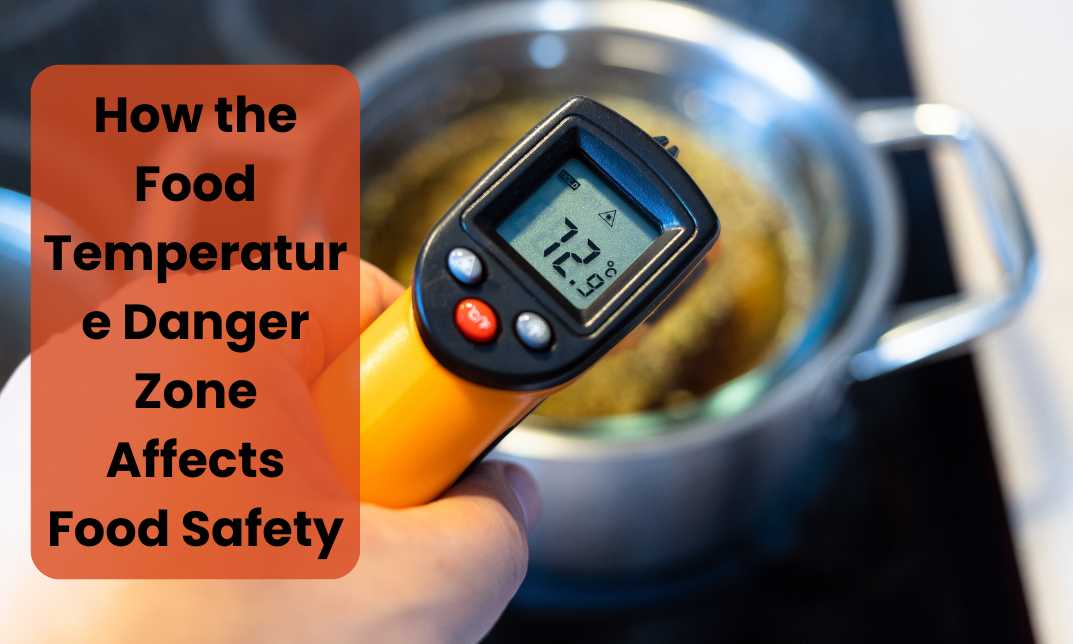
There is a particular thing that must be taken into consideration to avoid such problems and make sure that all precautions are taken it is the knowledge of the Food Temperature Danger Zone. This term might sound complicated but it means something very simple and important for everyone who deals with food: there are specific temperatures when the environment becomes perfect for the growth of bacteria and learning about those is one of the easiest ways to protect yourself and others.
Here is a comprehensive guide which will tell you everything you need to know about the food temperature danger zone in UK food safety practice.
What Is the Food Temperature Danger Zone?
The Food Temperature Danger Zone refers to the temperature range where harmful bacteria grow rapidly on food.
Under UK food hygiene guidance and GOV.UK – Food Hygiene for Businesses: Cooking Food Safely, bacteria multiply most quickly between
| Temperature | Risk Level |
|---|---|
| Below 5°C | Safe refrigeration slows bacterial growth. |
| 5°C–63°C | Danger Zone – Bacteria multiply rapidly. |
| Above 63°C | Hot holding temperature keeps food safe. |
| 75°C or above | Safe cooking temperature that destroys most harmful bacteria. |
The temperature range between 5°C and 63°C is known as the danger zone food safety professionals work hard to avoid. Food left within this range for extended periods provides ideal conditions for bacteria such as Salmonella, E. coli, Campylobacter, and Listeria to multiply.
The longer food remains within this temperature range, the greater the risk of food poisoning.
UK Food Temperature Guidelines
According to UK government and Food Standards Agency (FSA) guidance, following recommended temperature guidelines is essential for maintaining food safety.
| Food Safety Practice | Recommended Temperature |
|---|---|
| Refrigerator | 0°C–5°C |
| Freezer | -18°C or below |
| Hot Holding | 63°C or above |
| Cooking Poultry | Minimum 75°C |
| Reheating Food | Minimum 75°C |
| Cooling Food | As quickly as possible |
These temperatures are widely used throughout UK food businesses to comply with food hygiene standards.
Food Safety Description
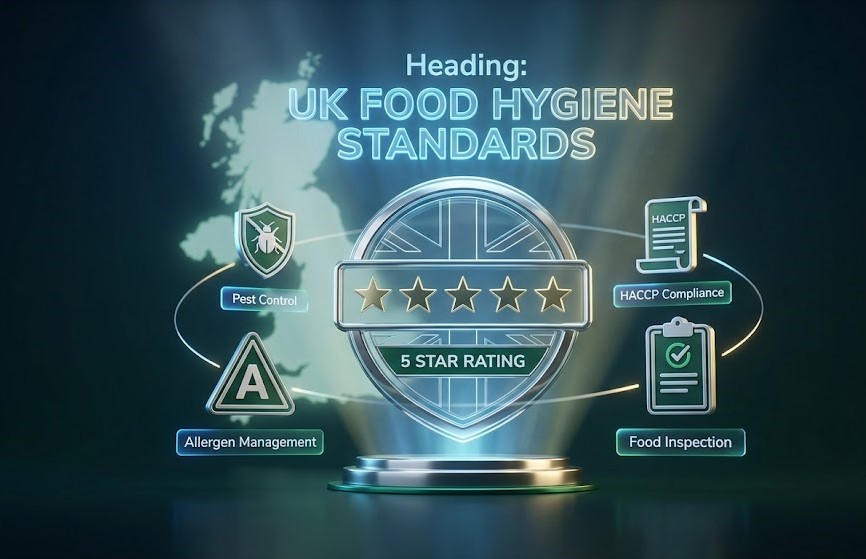
Food safety can be described as the process of preparing, handling, storage, and serving of food items that will not cause illnesses. This entails most aspects in the journey of the food item. Food safety includes personal hygiene, food temperature control, preventing cross-contamination, proper food storage, proper food preparation, maintaining cleanliness of equipment and surfaces, among other issues. It also includes pest and allergen management. In spite of being simple, any mistake in such areas will result in serious consequences. All these activities ensure that there is no food-related illness. They prevent an outbreak from happening and also ensure that businesses comply with UK food hygiene standards.
Understanding the Types of Food Hazards
Food can become unsafe through several different hazards. Understanding the types of food hazards helps food handlers identify and prevent contamination.
| Food Hazard Type | Description | Examples |
|---|---|---|
| Biological | Harmful microorganisms | Salmonella, E. coli, Listeria |
| Chemical | Harmful chemicals entering food | Cleaning products, pesticides |
| Physical | Foreign objects in food | Glass, metal, hair, plastic |
| Allergenic | Undeclared allergens | Nuts, milk, eggs, gluten |
Each hazard requires different preventive measures.
High Risk Food Examples
Some foods require a slightly greater level of precaution due to their physical composition. These are products that contain a lot of moisture and nutrients that bacteria simply cannot resist – such foods as cooked chicken and beef, fish, dairy products like milk, cream and soft cheeses, cooked rice and pasta, gravy, pre-made salads, eggs and sandwiches’ fillings definitely belong to the category of foods which require special attention. Especially meat and seafood products may become dangerous when they are not stored in the refrigerator or rewarmed properly, while milk also provides an excellent nutrient medium for bacteria growth. Rice is a little tricky as well since even after cooking, spores of Bacillus cereus bacteria may survive and multiply under room temperature conditions. The principle of proper storage of these foods is rather easy – keep the foods either below 5°C in the refrigerator or above 63°C if served hot, as recommended by UK food safety guidelines.
How Long Can Food Stay in the Danger Zone?
The longer food remains in the danger zone, the greater the bacterial growth.
| Time | Risk |
|---|---|
| Under 30 minutes | Low |
| 30 minutes–2 hours | Moderate |
| Over 2 hours | High |
| Over 4 hours | Unsafe for consumption |
Food businesses should minimise the amount of time food spends outside refrigeration.
Why Do Bacteria Grow Faster in the Danger Zone?
According to FSA and WHO, at temperatures between 5°C and 63°C, many harmful bacteria can double every 20–30 minutes under ideal conditions.
| Time Left in Danger Zone | Approximate Bacterial Growth |
|---|---|
| Start | 1,000 bacteria |
| After 30 minutes | 2,000 |
| After 1 hour | 4,000 |
| After 2 hours | 16,000 |
| After 4 hours | Over 250,000 |
This rapid multiplication explains why temperature control is one of the most effective food safety measures.


Foods Most Vulnerable to Temperature Abuse
Certain foods are particularly vulnerable to temperature abuse because they provide the ideal conditions for harmful bacteria to grow. High-risk foods include cooked chicken, minced beef, seafood, milk, cream, cheese, cooked rice, cooked pasta, eggs, prepared sandwiches, soft desserts, and ready meals. These foods contain high levels of moisture and nutrients, making them especially susceptible to bacterial growth if left within the food temperature danger zone. To minimise the risk of food poisoning, they should be stored under proper refrigeration, handled hygienically, cooked thoroughly where required, and never left at room temperature for longer than necessary.
Safety Rules in the Kitchen
Good kitchen hygiene really comes down to a handful of simple habits, but they make a huge difference. Wash your hands before handling any food, and always keep raw and cooked items separate to avoid cross-contamination. Chilled food should stay below 5°C, and everything should be cooked thoroughly before serving. Using separate chopping boards, cleaning surfaces regularly, and checking expiry dates all help keep things safe, as does storing food correctly and reheating it only once whenever possible. Any spoiled food should be thrown out straight away. None of these steps are complicated, but together they go a long way in reducing the risk of food poisoning.
UK Food Safety Regulations
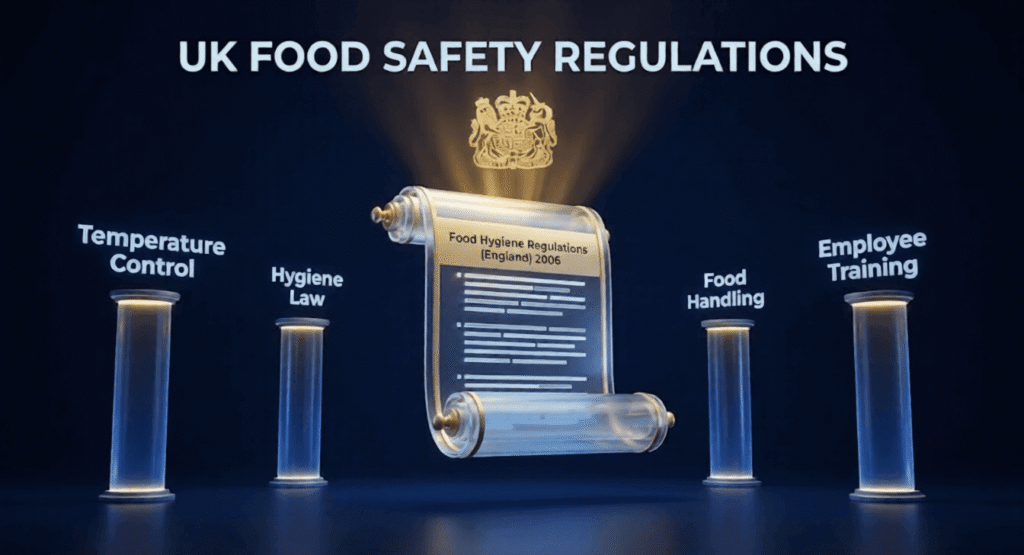
It is essential for food businesses located within the UK to adhere to food hygiene laws, which state that there should be proper control of temperatures during food handling.
There is an expectation that food businesses will have food safety management systems in place. Such food safety management systems are based on the Hazard Analysis Critical Control Points system. They include temperature hazard identification and temperature monitoring measures.
An Environmental Health Officer can visit a food business to confirm whether the food business complies with hygiene law, temperature recording, food handling, and food safety training of the employees.
Preventing Cross-Contamination
Cross-contamination happens when harmful bacteria transfer from one food or surface to another.
| Source | Prevention |
|---|---|
| Raw meat | Separate storage |
| Chopping boards | Colour-coded boards |
| Hands | Frequent washing |
| Utensils | Proper cleaning |
| Cloths | Regular replacement |
Cross-contamination is one of the leading causes of foodborne illness.
Correct Cooling and Reheating
Cooling food quickly is just as important as cooking it correctly.
Safe Cooling Steps
- Divide large portions into smaller containers.
- Allow steam to escape briefly.
- Refrigerate within two hours.
- Store below 5°C.
Safe Reheating
- Heat to at least 75°C.
- Stir evenly.
- Check the centre of the food.
- Reheat only once where possible.
Common Food Safety Mistakes
Many cases of food poisoning occur because of avoidable mistakes.
Examples include:
- Leaving cooked food on the counter overnight
- Under-cooking chicken
- Defrosting food at room temperature
- Using dirty chopping boards
- Failing to wash hands
- Storing raw meat above ready-to-eat foods
- Ignoring refrigerator temperatures
Awareness and proper training help prevent these errors.
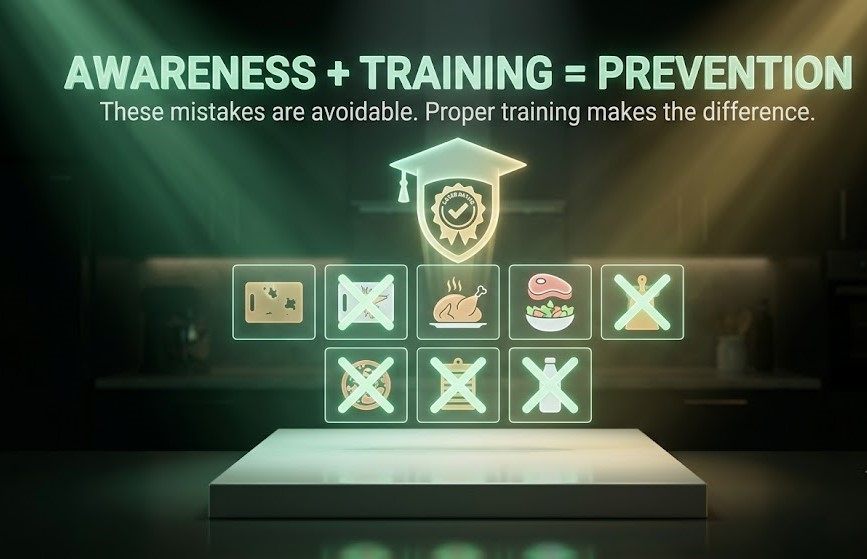
Common Food Safety Mistakes
Good food safety practices offer significant advantages.
| Benefit | Explanation |
|---|---|
| Protects public health | Reduces food poisoning |
| Improves food quality | Preserves freshness |
| Meets UK regulations | Supports legal compliance |
| Reduces waste | Prevents spoilage |
| Builds customer confidence | Enhances business reputation |
| Saves money | Minimises product loss |
Food safety is both a legal responsibility and a business investment.
Conclusion
Ultimately, however, there is one important aspect that must not be overlooked in all cases, namely that controlling temperature is the best way to prevent foodborne illness. The danger zone of 5°С to 63°С is more than just an arbitrary point on the chart since it represents the ideal range for bacteria growth; therefore, keeping food out of it is one of the best ways to protect customers. This includes proper chilling of food, serving hot dishes, cooking or reheating food to at least 75°С, and maintaining proper hygiene, among others. This advice is equally applicable both to the kitchen and the home since food safety concerns all consumers regardless of whether they prepare their food in the restaurant or cook at home.
Frequently Asked Questions (FAQs)
The food temperature danger zone is the temperature range between 5°C and 63°C, where harmful bacteria multiply rapidly and increase the risk of food poisoning.
Understanding danger zone food safety helps prevent bacterial growth, reduces foodborne illnesses, and ensures food remains safe for consumption.
Common high risk food examples include cooked chicken, seafood, dairy products, cooked rice, eggs, gravy, pasta, sandwiches, and ready-to-eat salads.
Chemical contamination of food occurs when harmful substances such as cleaning products, pesticides, or industrial chemicals accidentally come into contact with food.
A physical hazard in food refers to foreign objects such as glass, metal, plastic, hair, stones, or wood that accidentally contaminate food.
Trending Posts
Learn smarter, grow faster
Explore our blogs and take your skills to the next level.


Course Categories
- Accounting & Finance
- Animal Care
- Beauty & Wellness
- Business
- Business & Management
- Career Bundles
- Employability
- English Language / Adult Education
- Finance
- Health & Fitness
- Healthcare, Safety & Fitness
- Hospitality
- HR and Leadership
- interactive course
- IT & Development
- IT, Software & Technology
- Job Ready Programme
- Language
- Lifestyle
- Management
- Marketing
- Personal Development
- Photography & Video
- Project Management
- Psychology
- Security
- Sports
- Teaching & Education
- Technology
- Therapy
- Web Development