Counselling & Psychotherapy Course
 76 Students


 14-Day Money-Back Guarantee
-
1 Year Access
 -
Intermediate Skill Level
 -
Course Certificate Certificate
 -
42 Units
Units -
2 Quizzes
 -
20 hours, 45 minutes Duration
Description:
Addiction is something that can make anyone suffer and to prevent it from getting worse, counselling and psychotherapy are recommended. Counselling and Psychotherapy help people of all ages live happier, healthier and more productive. Through psychotherapy, the counsellor helps in facilitating procedures that help people develop healthier and more effective habits. Taking this course will help you become a better counsellor to help people struggling with addiction and other related problems. By the end of this course, you know the different methods for helping people overcome their addiction and become skilful in counselling and psychotherapy.
Who is the course for?
- Professionals who are helping people through counselling and psychotherapy
- People who have the interest to learn about in counselling and psychotherapy
Entry Requirement:
- This course is available to all learners, of all academic backgrounds.
- Learners should be aged 16 or over to undertake the qualification.
- Good understanding of English language, numeracy and ICT are required to attend this course.
Assessment:
- At the end of the course, you will be required to sit an online multiple-choice test. Your test will be assessed automatically and immediately so that you will instantly know whether you have been successful.
- Before sitting for your final exam, you will have the opportunity to test your proficiency with a mock exam.
Certification:
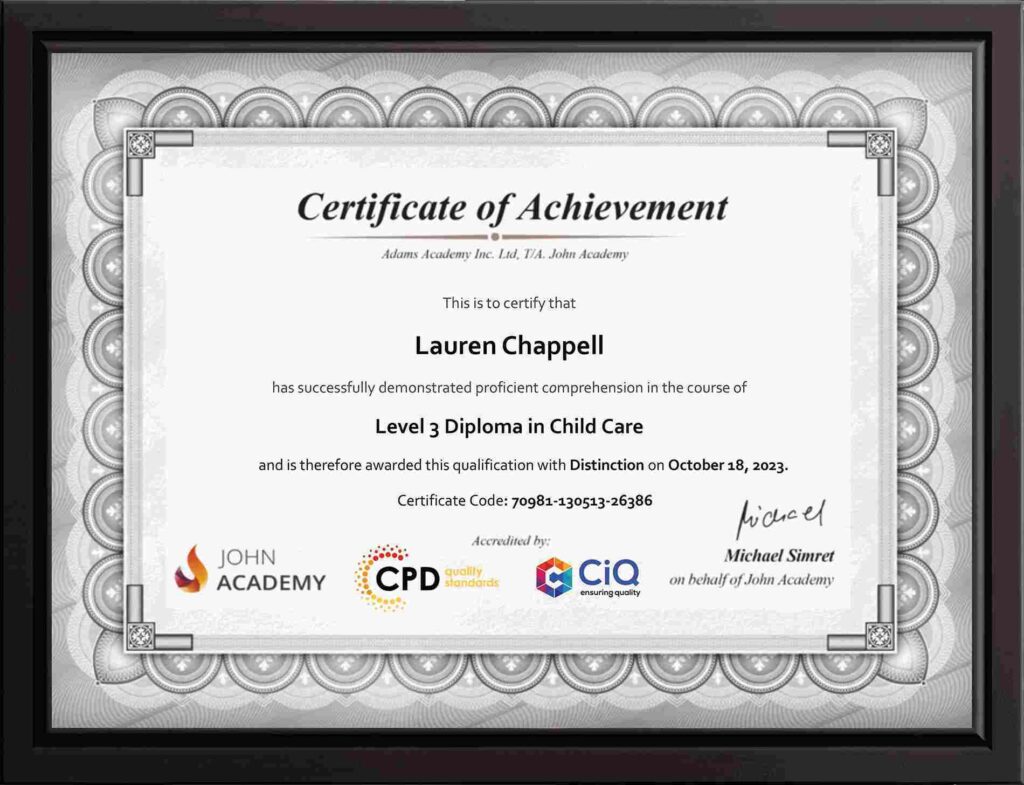
- After you have successfully passed the test, you will be able to obtain an Accredited Certificate of Achievement. You can however also obtain a Course Completion Certificate following the course completion without sitting for the test. Certificates can be obtained either in hard copy at the cost of £39 or in PDF format at the cost of £24.
- PDF certificate’s turnaround time is 24 hours, and for the hardcopy certificate, it is 3-9 working days.
Why choose us?
- Affordable, engaging & high-quality e-learning study materials;
- Tutorial videos/materials from the industry leading experts;
- Study in a user-friendly, advanced online learning platform;
- Efficient exam systems for the assessment and instant result;
- The UK & internationally recognised accredited qualification;
- Access to course content on mobile, tablet or desktop from anywhere anytime;
- The benefit of career advancement opportunities;
- 24/7 student support via email.
Career Path:
The Counselling & Psychotherapy Course is a useful qualification to possess, and would be beneficial for the following careers:
- Career Coach
- Guidance Counsellors
- Life Coach
- Mentors
- Psychologists
- Therapists.
-
 What is Counselling? 00:15:00
 -
Purpose and Aims of Counselling 00:15:00
-
Fields of Counselling 00:15:00
-
Counselling Theories 00:15:00
-
Skills Needed in Counselling 00:30:00
-
Group Counselling 00:30:00
-
Ethics in Counselling 00:15:00
-
Conducting Sessions 00:30:00
-
Introduction to Addiction Counselling 00:15:00
-
Adlerian Psychology 00:30:00
-
Behavioral Therapy 00:15:00
-
Brief Therapy 00:30:00
-
Role of Addiction Counsellor 00:30:00
-
Goals and Objectives of Individual Drug Counseling 00:15:00
-
Treatment Initiation 00:15:00
-
Dealing With Problems That Arise 00:15:00
-
Counsellor Characteristics and Training 00:15:00
-
Addiction Counselling Basics 01:00:00
-
Realize That You Need Help 01:00:00
-
Realize the Importance of Selecting the Correct Treatment 01:00:00
-
Work On Identifying the Source of Why You Have an Addiction 01:00:00
-
Have an Open Mind 01:00:00
-
Be Honest With Yourself and Others 01:00:00
-
The Dangers of Not Getting Help When You Need It 00:30:00
-
What is Psychotherapy? 00:30:00
-
Theories of Psychotherapy 00:30:00
-
Structure of Personality 00:30:00
-
MDMA-Assisted Psychotherapy 01:00:00
-
How Does Psychodynamic Psychotherapy Work? 00:30:00
-
Why Is Emotion Regulation Important? 00:30:00
-
Introduction 00:30:00
-
Types Of Psychotherapies 00:15:00
-
Psychoanalysis 00:30:00
-
Gestalt Therapy 01:00:00
-
Cognitive Behavioural Therapy 00:30:00
-
Expressive Therapy 00:30:00
-
Hypnotherapy 00:30:00
-
Wrapping Up 00:15:00
-
Refer A Friend
-
Order Your Certificates and Transcripts
What Our Students are Saying

Sam Carpenter
John Academy has helped me in my development, and I took the courses seriously and gained a qualifications certificate, which I've wanted to do for a long time. I highly recommend it, and a few friends have signed up, too. Thank you, John Academy.
Georgina Salazar
Easy to access, generous options for multiple learning and approaches. Supportive team.
Wayne Wright
The course empowers me to make my dreams come true. The course material was excellent. John Academy is good to study.
Romina
I am thankful that I have chosen John Academy for my online courses. It has given me a platform where I have learned a lot. It has so many reading materials with a handful of knowledge. Once again, thank you so much to the John Academy support team, who has cooperated & supported me throughout this journey.
Peter Gilbert
Brilliant course, with so many to choose from, very good value and a certificate at the end. Quick turnaround to receive a certificate. Very good academy I have completed several and have 2 ongoing at the moment. Never had any problems. Excellent customer service. Would recommend.

Other Students Also Bought