Advanced Diploma in Dog Training
 613 Students


 14-Day Money-Back Guarantee
-
1 Year Access
 -
Level 4 - Adv. Diploma Skill Level
 -
Course Certificate Certificate
 -
48 Units
Units -
2 Quizzes
 -
20 hours, 30 minutes Duration


Who is the course for?
- Pet care professionals who specialize in dog training
- Dog owners and lovers who want to learn how to train their dogs
Entry Requirement:
- This course is available to all learners, of all academic backgrounds.
- Learners should be aged 16 or over to undertake the qualification.
- Good understanding of English language, numeracy and ICT are required to attend this course.
Why choose us?
- Affordable, engaging & high-quality e-learning study materials;
- Tutorial videos/materials from the industry leading experts;
- Study in a user-friendly, advanced online learning platform;
- Efficient exam systems for the assessment and instant result;
- The UK & internationally recognised accredited qualification;
- Access to course content on mobile, tablet or desktop from anywhere anytime;
- The benefit of career advancement opportunities;
- 24/7 student support via email.
Assessment:
- At the end of the course, you will be required to sit an online multiple-choice test. Your test will be assessed automatically and immediately so that you will instantly know whether you have been successful.
- Before sitting for your final exam, you will have the opportunity to test your proficiency with a mock exam.
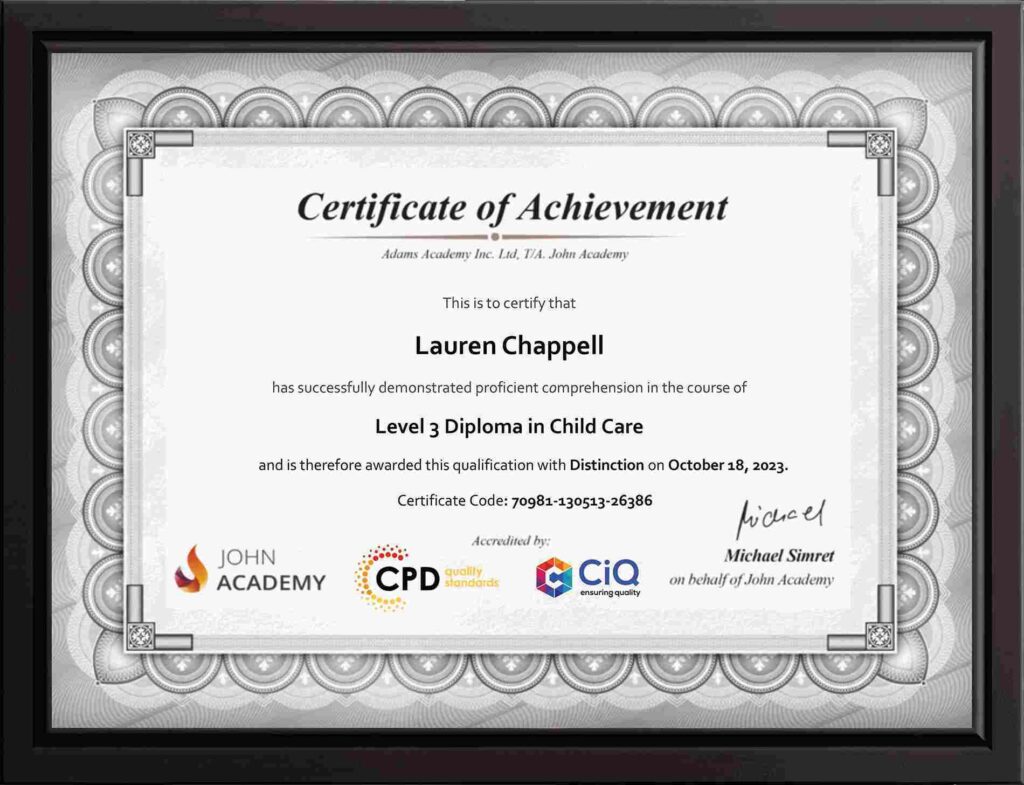
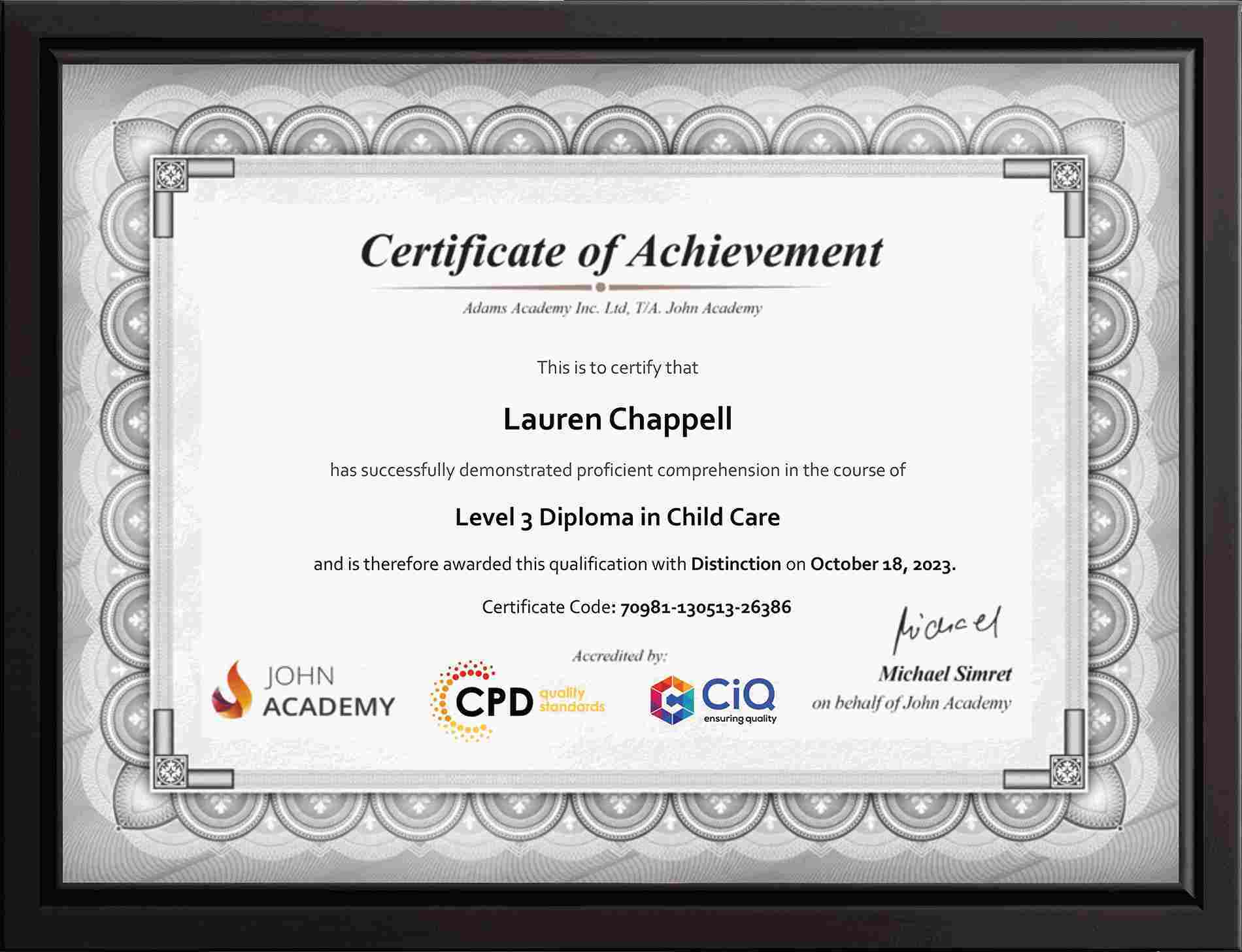
Certificate of Achievement
After completing this course successfully, you will be able to obtain an Accredited Certificate of Achievement. Certificates & Transcripts can be obtained either in Hardcopy at £14.99 or in PDF format at £11.99.
Career Path:
The Advanced Diploma in Dog Training is perfect for dog owners and lovers who want to live peacefully with their obedient and well-behaved dogs. The course can also help in pet care careers such as:
- Dog Trainer
- Pet Care Specialist
- Pet Groomer
- Pet Store Owner
- Veterinarian.
-
 Introduction 00:30:00
 -
The Basic Commands 01:00:00
-
Training Your New Puppy 01:00:00
-
Leash/Collar Training 00:30:00
-
Head Collar Training 00:30:00
-
Training Collar or Choke Collar 00:30:00
-
Reward Training 00:30:00
-
Crate and House Training 01:00:00
-
Dog Obedience Training 00:30:00
-
Dog Training Issues 00:30:00
-
Advanced Dog Training Exercises 00:30:00
-
More Dog or Puppy Training Issues and Exercises 01:00:00
-
Conclusion 00:15:00
-
Introduction 00:15:00
-
My Dog Barks: What to Do? 00:30:00
-
My dog loves to bark: Understanding the Dog 24/7 00:30:00
-
The Myths About Dogs 00:15:00
-
I don’t want my dog getting hurt 00:30:00
-
Dealing with Barking Problem 00:30:00
-
Controlling his ARF-ARF-ARF 00:30:00
-
Curious About Barking Reasons 00:30:00
-
There are still any Reasons Left? 00:30:00
-
Camp Barking 00:15:00
-
Training a Dog Yourself The Easy Way 00:30:00
-
What about a Watchdog 00:15:00
-
Dog vs. The Neighbours 00:30:00
-
Uh oh Puppies 00:30:00
-
I Could only Tolerate so Much 00:15:00
-
Me and my Dog 00:30:00
-
Be in Touch with Your Pooch 00:30:00
-
The Justice System 00:15:00
-
Conclusion 00:15:00
-
Introduction 00:15:00
-
Dog Shows 00:15:00
-
I’m a beginner, now what should I do? 00:30:00
-
Training your Dogs 00:15:00
-
Taking Care of Your Show dog 00:15:00
-
Feeding Your Dog in a Nutritious Way 00:15:00
-
Dog Show Categories 00:15:00
-
Why Smaller breeds are preferable? 00:30:00
-
Which Dog Show is perfect for my Dog? 00:15:00
-
What to remember 00:15:00
-
Common Terminologies 00:15:00
-
Conclusion 00:15:00
-
Refer A Friend
-
Order Your Certificates and Transcripts
What Our Students are Saying

Sam Carpenter
John Academy has helped me in my development, and I took the courses seriously and gained a qualifications certificate, which I've wanted to do for a long time. I highly recommend it, and a few friends have signed up, too. Thank you, John Academy.
Georgina Salazar
Easy to access, generous options for multiple learning and approaches. Supportive team.
Wayne Wright
The course empowers me to make my dreams come true. The course material was excellent. John Academy is good to study.
Romina
I am thankful that I have chosen John Academy for my online courses. It has given me a platform where I have learned a lot. It has so many reading materials with a handful of knowledge. Once again, thank you so much to the John Academy support team, who has cooperated & supported me throughout this journey.
Peter Gilbert
Brilliant course, with so many to choose from, very good value and a certificate at the end. Quick turnaround to receive a certificate. Very good academy I have completed several and have 2 ongoing at the moment. Never had any problems. Excellent customer service. Would recommend.

Other Students Also Bought