Complete French Language Course
 38 Students


 14-Day Money-Back Guarantee
-
1 Year Access
 -
Level 2 - Certificate Skill Level
 -
Course Certificate Certificate
 -
68 Units
Units -
0 Quizzes
 -
3 hours, 37 minutes Duration
Description
Different language learning may enhance one’s knowledge providing him with various kind of knowledge about culture, ethics, and manner. It says that “language carries culture” Ngugi Wa Thiong’o. If you want to learn the French language, the Complete French Language Course course may be the best for you. To assess its authenticity you may look at Complete French Language Course course.
The course will provide you with some exquisite methods so that you can learn French easily. It gives you very easy techniques to grasp the core concept of this language. It does not matter how much meritorious or bad you are in learning. The course assists to learn vocabularies, phrase, sentence structure, and important conversational words step by step. The course will also improve your confidence to speak in front of other especially in French-speaking countries actively.
Assessment:
This course does not involve any MCQ test. Students need to answer assignment questions to complete the course, the answers will be in the form of written work in pdf or word. Students can write the answers in their own time. Once the answers are submitted, the instructor will check and assess the work.
Certification:
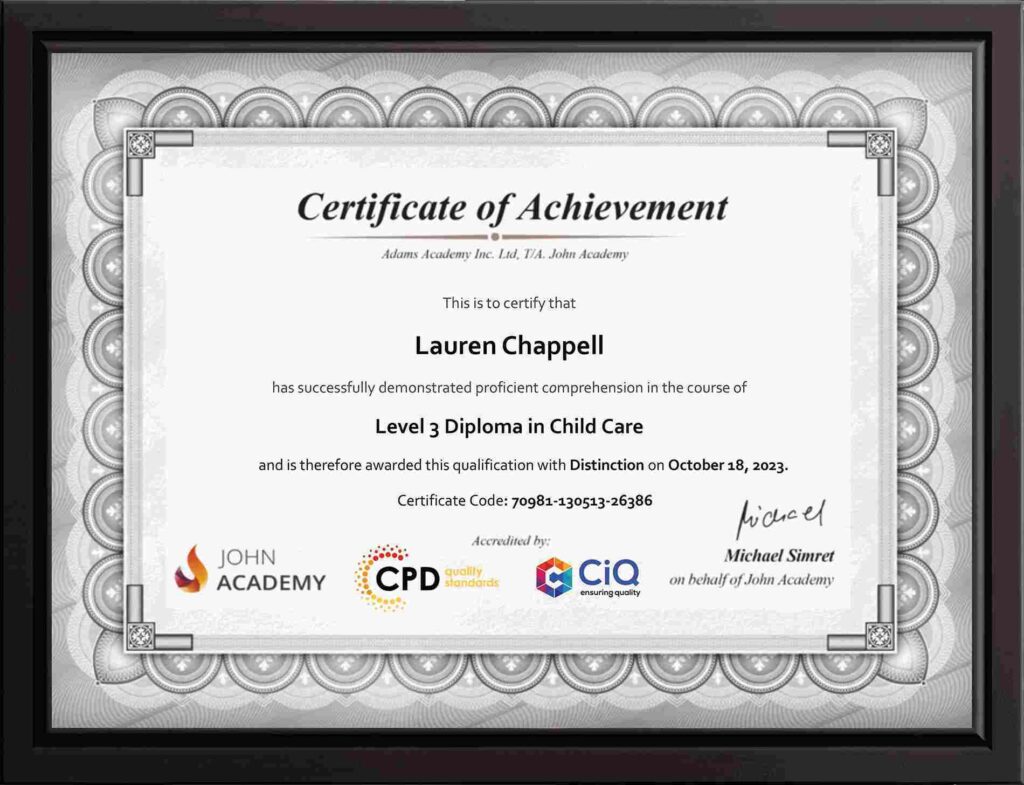
After completing and passing the course successfully, you will be able to obtain an Accredited Certificate of Achievement. Certificates can be obtained either in hard copy at a cost of £39 or in PDF format at a cost of £24.
Who is this Course for?
Complete French Language Course is certified by CPD Qualifications Standards and CiQ. This makes it perfect for anyone trying to learn potential professional skills.
As there is no experience and qualification required for this course, it is available for all students from any academic background.
Requirements
Our Complete French Language Course is fully compatible with any kind of device. Whether you are using Windows computer, Mac, smartphones or tablets, you will get the same experience while learning. Besides that, you will be able to access the course with any kind of internet connection from anywhere at any time without any kind of limitation.
Career Path
After completing this course you will be able to build up accurate knowledge and skills with proper confidence to enrich yourself and brighten up your career in the relevant job market.
-
 French in just three minutes? 00:05:00
-
Lesson 1a 00:03:00
-
Lesson 1b 00:03:00
-
Lesson 1c 00:03:00
-
Lesson 1d 00:03:00
-
Lesson 2a 00:03:00
-
Lesson 2b 00:03:00
-
Lesson 2c 00:03:00
-
Lesson 2d 00:03:00
-
Lesson 2e 00:05:00
-
Lesson 3a 00:03:00
-
Lesson 3b 00:04:00
-
Lesson 3c 00:04:00
-
Lesson 3d 00:03:00
-
Lesson 3e 00:03:00
-
Lesson 3f 00:03:00
-
Lesson 3g 00:04:00
-
Lesson 4a 00:03:00
-
Lesson 4b 00:03:00
-
Lesson 4c 00:03:00
-
Lesson 4d 00:03:00
-
Lesson 4e 00:03:00
-
Lesson 4f 00:03:00
-
Lesson 4g 00:05:00
-
Lesson 5a 00:03:00
-
Lesson 5b 00:03:00
-
Lesson 5c 00:03:00
-
Lesson 5d 00:03:00
-
Lesson 5e 00:04:00
-
Lesson 5f 00:03:00
-
Lesson 5g 00:03:00
-
Lesson 5h 00:03:00
-
Lesson 5i 00:05:00
-
Lesson 6a 00:03:00
-
Lesson 6b 00:04:00
-
Lesson 6c 00:03:00
-
Lesson 6d 00:04:00
-
Lesson 6e 00:03:00
-
Lesson 6f 00:03:00
-
Lesson 6g 00:04:00
-
Lesson 7a 00:03:00
-
Lesson 7b 00:03:00
-
Lesson 7c 00:03:00
-
Lesson 7d 00:05:00
-
Lesson 7e 00:02:00
-
Lesson 7f 00:03:00
-
Lesson 7g 00:03:00
-
Lesson 7h 00:03:00
-
Lesson 8a 00:03:00
-
Lesson 8b 00:03:00
-
Lesson 8c 00:03:00
-
Lesson 8d 00:05:00
-
Lesson 8e 00:03:00
-
Lesson 8f 00:04:00
-
Lesson 8g 00:03:00
-
Lesson 8h 00:03:00
-
Lesson 8i 00:03:00
-
Lesson 8j 00:03:00
-
Lesson 8k 00:03:00
-
Lesson 9a 00:03:00
-
Lesson 9b 00:03:00
-
Lesson 9c 00:03:00
-
Lesson 9d 00:03:00
-
Lesson 9e 00:03:00
-
Lesson 9f 00:06:00
-
Resources – French Course
-
Assignment – Complete French Language Course
-
Order Your Certificates and Transcripts
What Our Students are Saying

Sam Carpenter
John Academy has helped me in my development, and I took the courses seriously and gained a qualifications certificate, which I've wanted to do for a long time. I highly recommend it, and a few friends have signed up, too. Thank you, John Academy.
Georgina Salazar
Easy to access, generous options for multiple learning and approaches. Supportive team.
Wayne Wright
The course empowers me to make my dreams come true. The course material was excellent. John Academy is good to study.
Romina
I am thankful that I have chosen John Academy for my online courses. It has given me a platform where I have learned a lot. It has so many reading materials with a handful of knowledge. Once again, thank you so much to the John Academy support team, who has cooperated & supported me throughout this journey.
Peter Gilbert
Brilliant course, with so many to choose from, very good value and a certificate at the end. Quick turnaround to receive a certificate. Very good academy I have completed several and have 2 ongoing at the moment. Never had any problems. Excellent customer service. Would recommend.

Other Students Also Bought